At CoRL 2026, GENTO Unveils a 21-DoF Hand as NVIDIA Introduces GR00T 2 With TIANJI Marvin Pro

At CoRL 2026, GENTO Unveils a 21-DoF Hand as NVIDIA Introduces GR00T 2 With TIANJI Marvin Pro

GENTO’s new dexterous hand and a TIANJI Marvin Pro platform used in NVIDIA’s GR00T 2 launch demonstrations bring two developments in robot manipulation to CoRL 2026.

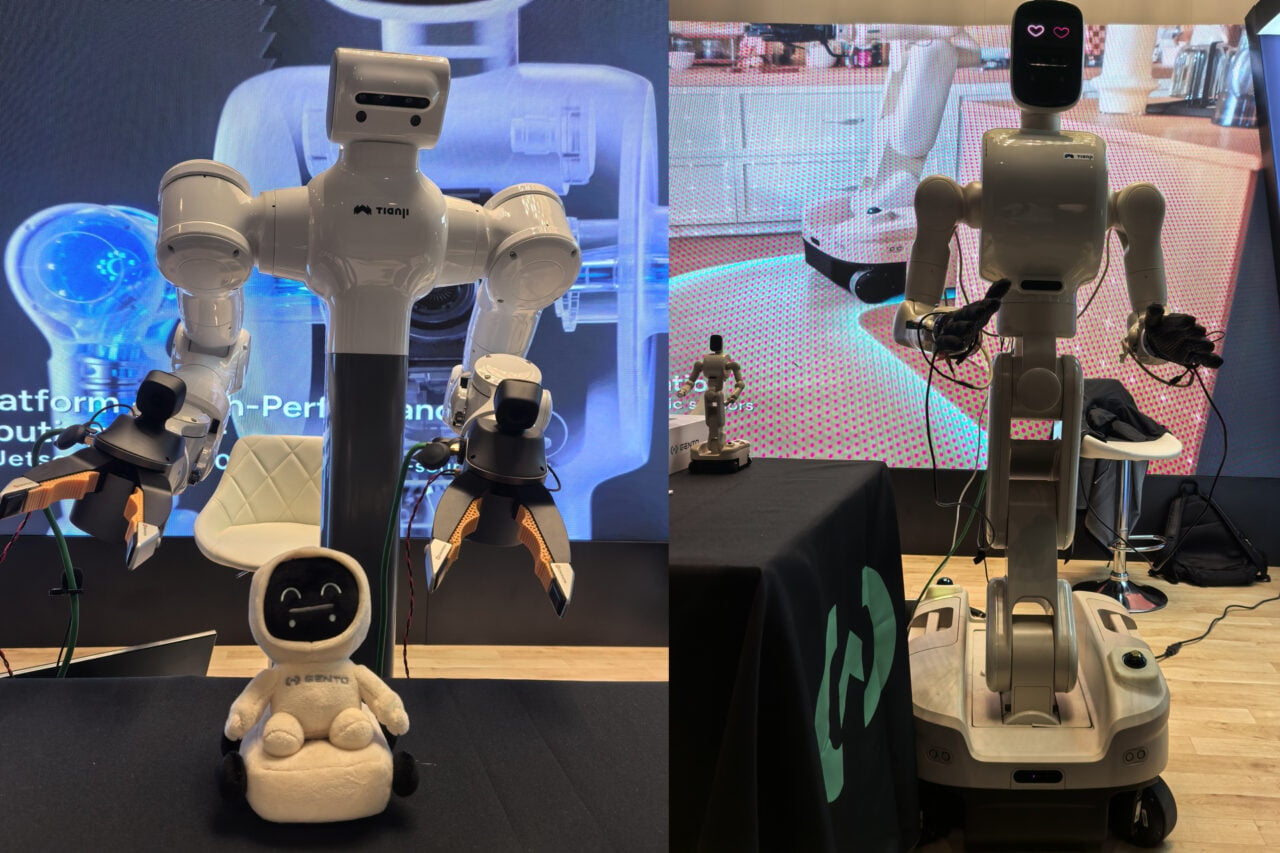
The wider robotics field includes NVIDIA’s Isaac development platform and Tesla’s Optimus humanoid robot. GENTO, an independent humanoid robot brand incubated by Tianji Intelligence, builds complete humanoid systems on top of Tianji Intelligence’s TIANJI-branded force-controlled arm technology, giving AI models a way to act in the physical world. This week, at the Conference on Robot Learning (CoRL 2026) in Austin, GENTO arrives at CoRL for the first time, exhibiting at Booth 602 until 1:00 p.m. local time on November 11.

A robot that can plan and reason still has to touch things. Assembly, insertion, operating a screwdriver, wiping — most of the work humans do with their hands involves continuous contact with objects and surfaces, not clean trajectories through open air. A system without force sensing can execute a pre-planned motion, but it cannot adapt when a part resists, a surface shifts, or an object is slightly out of position. It also cannot contribute useful data to training, because the force signals that describe what contact actually feels like never get captured.

Tianji Intelligence began developing in-house MEMS torque sensors in 2015, eleven years before this week’s CoRL exhibit. The result of that work is a sensor-to-system stack that the company reports as detecting torque down to 0.02 N·m, against an industry norm of 1–5 N·m, with absolute force control…


In brief

The wider robotics field includes NVIDIA’s Isaac development platform and Tesla’s Optimus humanoid robot. GENTO, an independent humanoid robot brand incubated by Tianji Intelligence, builds complete humanoid systems on top of Tianji Intelligence’s TIANJI-branded force-controlled arm technology, giving AI models a way to act in the physical world. Tianji Intelligence began developing in-house MEMS torque sensors in 2015, eleven years before this week’s CoRL exhibit.

This is the opening of the story, shared with credit to Gizmodo. The rest of the report — with every detail — continues on the publisher’s website.

Continue reading at Gizmodo ↗

Cookie settings

Choose which cookies we may use. You can change this at any time from Cookie settings in the footer. Details of each cookie are in the Cookie Policy.

Strictly necessary

Needed for sign-in, security, payments and remembering these choices. Always on.

Preferences

Remember settings such as dark mode.

Analytics & performance

Help us count visits, understand which pages, devices and countries our readers use, and measure how well the site performs – anonymous and aggregated.

Advertising & marketing

Lets advertising partners show and personalise adverts, measure impressions, clicks and visits, prevent ad fraud and pay us – this is how the free site is funded.

🔔 News notifications

Get headlines from NewsHub on this device — even when the site is closed.

You can switch this off at any time. Works on Android, Windows, Mac and Linux browsers; on iPhone/iPad add the site to your Home Screen first.