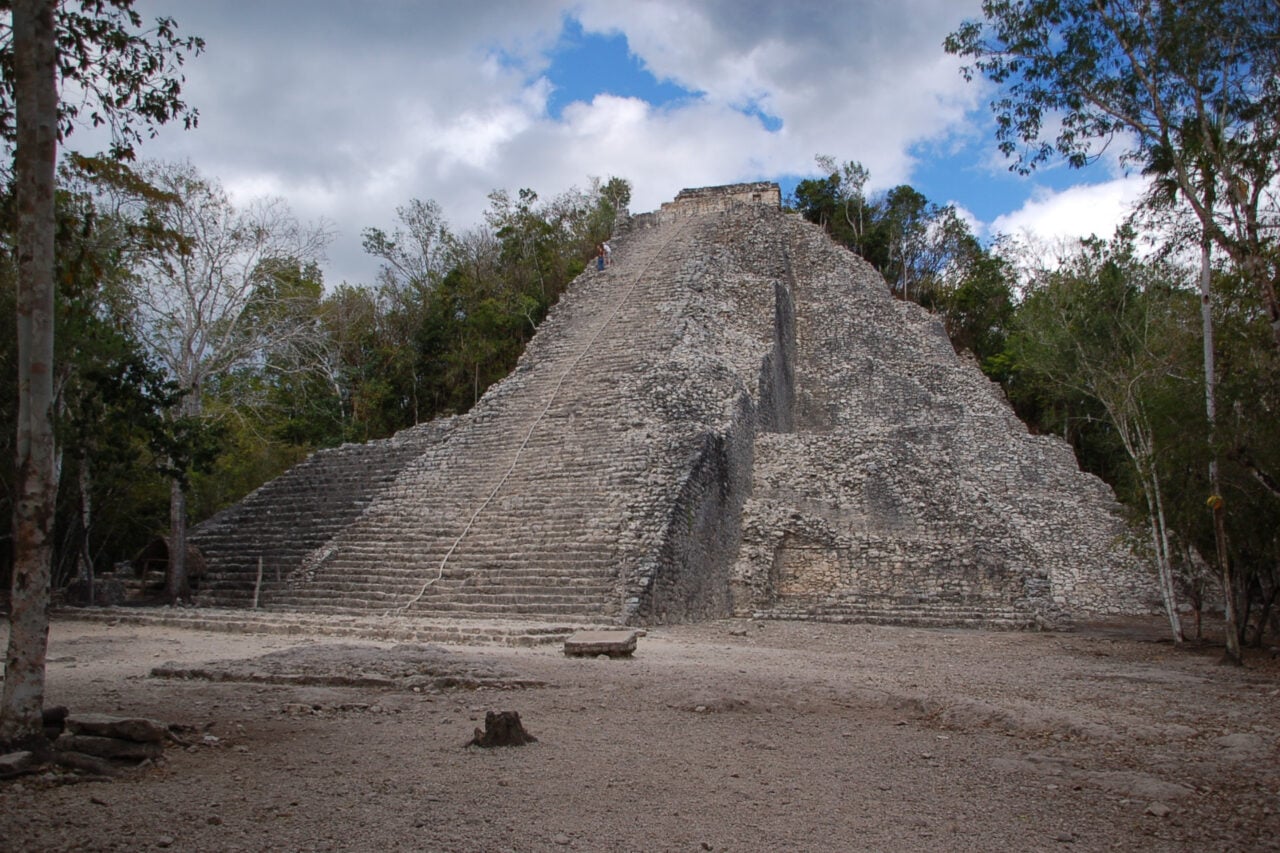
The Ancient Maya Used Mercury for Paint—and Poisoned Entire Lakes for Centuries

The Ancient Maya Used Mercury for Paint—and Poisoned Entire Lakes for Centuries

'The mercury levels for these two sediment cores came back just higher than anything we could find.'

During the height of the Maya civilization, two lakes in Mexico had staggeringly high mercury levels.

In a study published earlier this month in the journal Science Advances, researchers extracted sediment cores from Cenote Xcach and Lago Coba, two lakes in the Mexican part of the Yucatan. What they found was so surprising that at first they thought they’d made a mistake—for centuries during the Maya Classic period (250 CE to 900 CE), the mercury levels in both lakes were significantly higher than modern mercury toxicity thresholds. The team, which is mostly made up of non-archaeologists, hopes their results will provide new insight into Ancient Maya archaeology.

Today, Maya are an Indigenous people of Mesoamerica who descend from the ancient Maya, one of the most advanced civilizations of the Americas. The ancient Maya thrived in Mesoamerica from approximately 1000 BCE to 1500 CE and built monumental architecture, including the famous Chichen Itza Pyramid. The fact that they used mercury is nothing new, study co-author Matthew Waters, a paleolimnologist at Auburn University who studies ancient toxic algal blooms, told Gizmodo. But it hadn’t been documented as much in the Yucatan Peninsula.

In fact, mercury “was not even on our radar to look for,” he said.

In brief

During the height of the Maya civilization, two lakes in Mexico had staggeringly high mercury levels. Today, Maya are an Indigenous people of Mesoamerica who descend from the ancient Maya, one of the most advanced civilizations of the Americas. The fact that they used mercury is nothing new, study co-author Matthew Waters, a paleolimnologist at Auburn University who studies ancient toxic algal blooms, told Gizmodo.

This is the opening of the story, shared with credit to Gizmodo. The rest of the report — with every detail — continues on the publisher’s website.

Continue reading at Gizmodo ↗

Cookie settings

Choose which cookies we may use. You can change this at any time from Cookie settings in the footer. Details of each cookie are in the Cookie Policy.

Strictly necessary

Needed for sign-in, security, payments and remembering these choices. Always on.

Preferences

Remember settings such as dark mode.

Analytics & performance

Help us count visits, understand which pages, devices and countries our readers use, and measure how well the site performs – anonymous and aggregated.

Advertising & marketing

Lets advertising partners show and personalise adverts, measure impressions, clicks and visits, prevent ad fraud and pay us – this is how the free site is funded.

🔔 News notifications

Get headlines from NewsHub on this device — even when the site is closed.

You can switch this off at any time. Works on Android, Windows, Mac and Linux browsers; on iPhone/iPad add the site to your Home Screen first.