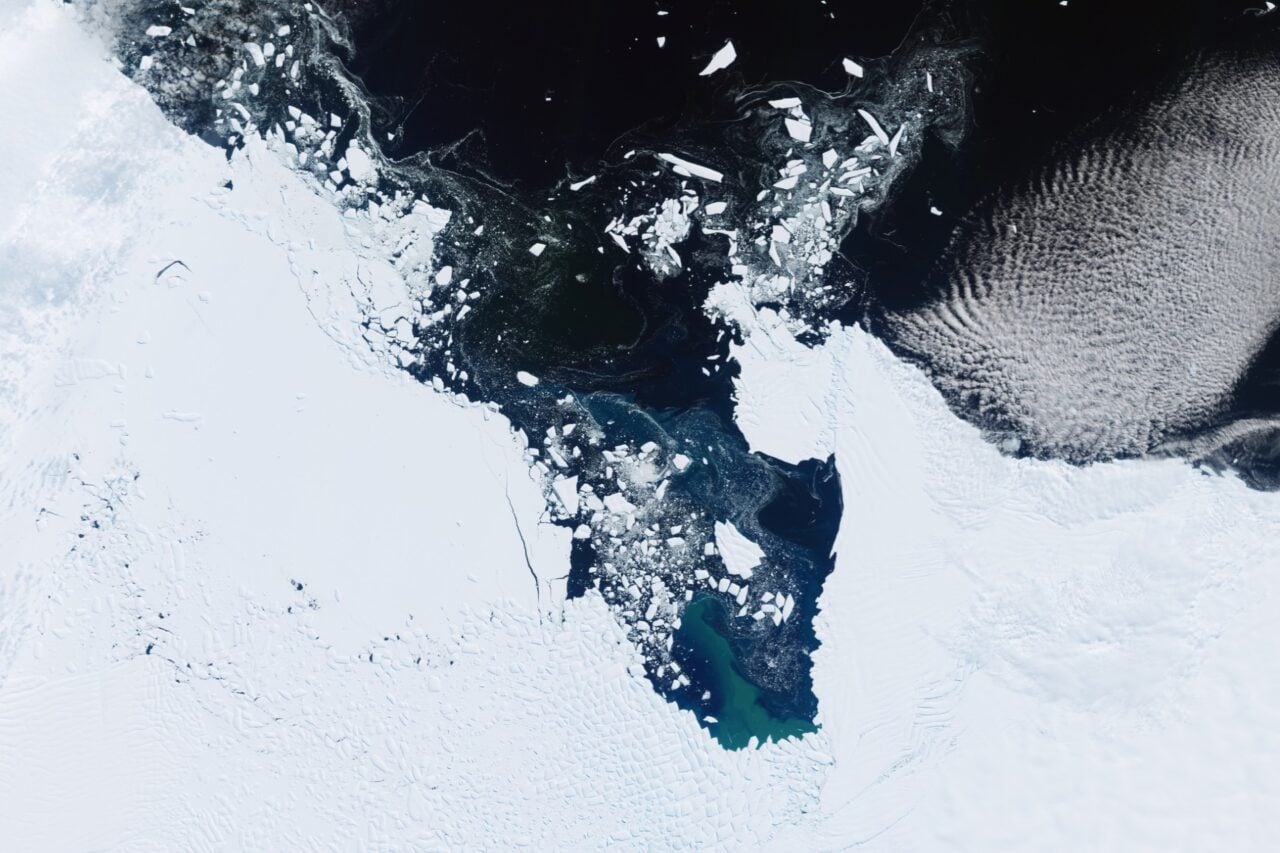
As global temperatures rise, the West Antarctic Ice Sheet is disappearing at an alarming rate. Scientists have grown increasingly concerned that its outlet glaciers—including Thwaites, also known as the “doomsday glacier”—are going to collapse. A deeper look at the ice sheet’s climate history has only heightened their alarm.
A study published Monday in the journal Nature Communications presents direct evidence that West Antarctica’s most vulnerable ice streams repeatedly collapsed and retreated far inland during natural periods of global warming over the last 800,000 years. That includes Thwaites and the neighboring Pine Island Glacier, two massive, fast-flowing outlet glaciers that discharge ice into the Amundsen Sea.
During those past warm periods, global average temperatures were only 1.8 to 2.7 degrees Fahrenheit (1 to 1.5 degrees Celsius) warmer than pre-industrial levels, meaning they were about the same as they are today. Even so, water temperatures in front of the West Antarctic Ice Sheet rose between 1.8 and 5.4 degrees F (1 and 3 degrees C) above the current, near-freezing baseline.
While previous collapses took place over several thousand years, global temperatures are rising at an unprecedented rate today. United Nations’ scientists recently determined that Earth’s average temperature is set to rise more than 2.7 degrees F (1.5 degrees C) above pre-industrial levels within the next few years, overshooting the Paris Agreement target.…