Fears of rising antisemitism in Europe

Fears of rising antisemitism in Europe

Holocaust survivor Regina Sluszny commemorates the victims of Auschwitz as Jewish communities across Europe face growing hostility. What does the promise of "Never Again" mean for Jewish life in Europe today?

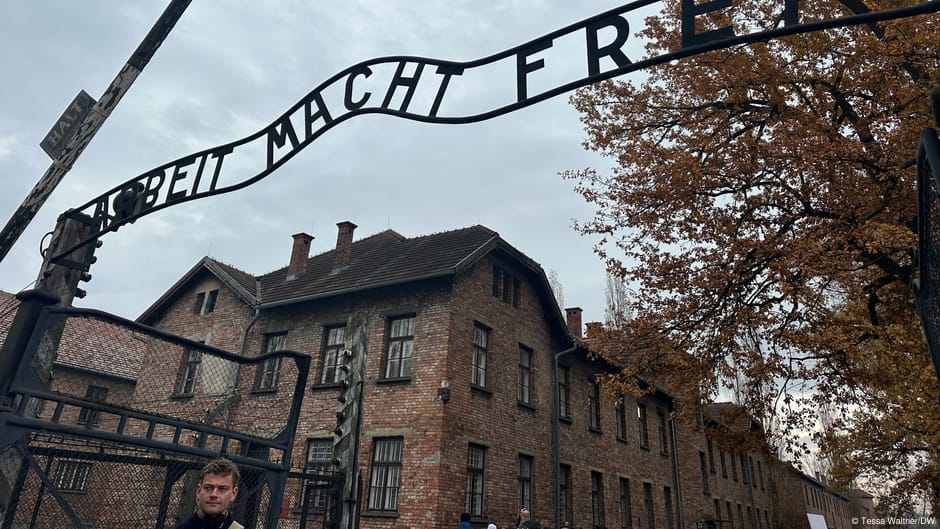
Regina Sluszny makes her way in her wheelchair through the iron gate marking the entrance to the former Auschwitz concentration camp. "I feel the cold, both physically and emotionally," says the 87-year-old Jewish woman, her gaze fixed on the grey horizon.

How many times has she been here? Six, seven, perhaps eight, she estimates. And each time, the same thoughts run through her mind: "I think about my husband's family. He lost seven loved ones here. They were sent straight to the gas chambers and murdered."

Regina Sluszny traveled to Poland with a delegation from the European Jewish Association (EJA), a European advocacy group representing Jewish interests that regularly organizes conferences on Jewish life as well as visits to former concentration camps.

This year, the organization invited political representatives and members of Jewish communities to Krakow and Auschwitz on November 9 and 10. The trip was deliberately scheduled to coincide with the anniversary of the November Pogroms of 1938, widely regarded as a watershed moment on the path to the Holocaust.

"Honoring the past, securing the future" is the event's motto. Like many others in attendance, Holocaust survivor Regina Sluszny fears that the horrors of the Shoah are slowly fading from Europe's collective memory.

Among this year's international religious and political representatives, the guest of honor was Reza Pahlavi, the…

In brief

Regina Sluszny makes her way in her wheelchair through the iron gate marking the entrance to the former Auschwitz concentration camp. Regina Sluszny traveled to Poland with a delegation from the European Jewish Association (EJA), a European advocacy group representing Jewish interests that regularly organizes conferences on Jewish life as well as visits to former concentration camps.

This is the opening of the story, shared with credit to DW — Top stories. The rest of the report — with every detail — continues on the publisher’s website.

Continue reading at DW — Top stories ↗

Cookie settings

Choose which cookies we may use. You can change this at any time from Cookie settings in the footer. Details of each cookie are in the Cookie Policy.

Strictly necessary

Needed for sign-in, security, payments and remembering these choices. Always on.

Preferences

Remember settings such as dark mode.

Analytics & performance

Help us count visits, understand which pages, devices and countries our readers use, and measure how well the site performs – anonymous and aggregated.

Advertising & marketing

Lets advertising partners show and personalise adverts, measure impressions, clicks and visits, prevent ad fraud and pay us – this is how the free site is funded.

🔔 News notifications

Get headlines from NewsHub on this device — even when the site is closed.

You can switch this off at any time. Works on Android, Windows, Mac and Linux browsers; on iPhone/iPad add the site to your Home Screen first.