Female members of the European Parliament will be able to delegate their votes to colleagues before and after giving birth. Their male counterparts, however, will not enjoy the same right.The measure, given final approval on Thursday, introduces a temporary exemption from the rule requiring MEPs to vote in person during plenary sessions. Female lawmakers will be able to appoint a trusted colleague to vote on their behalf for up to three months before their due date and six months after giving birth.The change is intended to ensure that new mothers can continue to have their voices heard in Parliament while caring for their children.But the exclusion of fathers raises questions about the equal sharing of childcare responsibilities, a principle MEPs routinely champion.“I wish we could be doing the same for young fathers, or those adopting children,” said Dutch Socialist MEP Lara Wolters, who was in charge of the file through the chamber.Parliament’s own rules on leave already cover both parents: any MEP is entitled to a justified absence from two months before the birth to four months after.The new rule passed by an overwhelming majority and most MEPs welcomed it, but many remain dissatisfied.“We wanted to extend this possibility to male lawmakers, but we had to adopt a pragmatic approach,” Spanish Socialist MEP Juan Fernando López Aguilar told Euronews.
MEPs back voting rights for new mothers – but fathers miss out
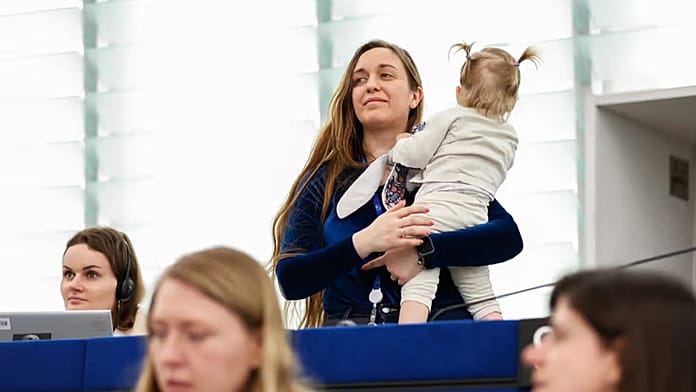
The new rule lets only female MEPs delegate their vote around childbirth, raising questions about gender equality among lawmakers.
In brief
Female members of the European Parliament will be able to delegate their votes to colleagues before and after giving birth. Their male counterparts, however, will not enjoy the same right.The measure, given final approval on Thursday, introduces a temporary exemption from the rule requiring MEPs to vote in person during plenary sessions. Female lawmakers will be able to appoint a trusted colleague to vote on their behalf for up to three months before their due date and six months after giving birth.The change is intended to ensure that new mothers can continue to have their voices heard in Parliament while caring for their children.But the exclusion of fathers raises questions about the e…
This is the opening of the story, shared with credit to Euronews. The rest of the report — with every detail — continues on the publisher’s website.
Continue reading at Euronews ↗