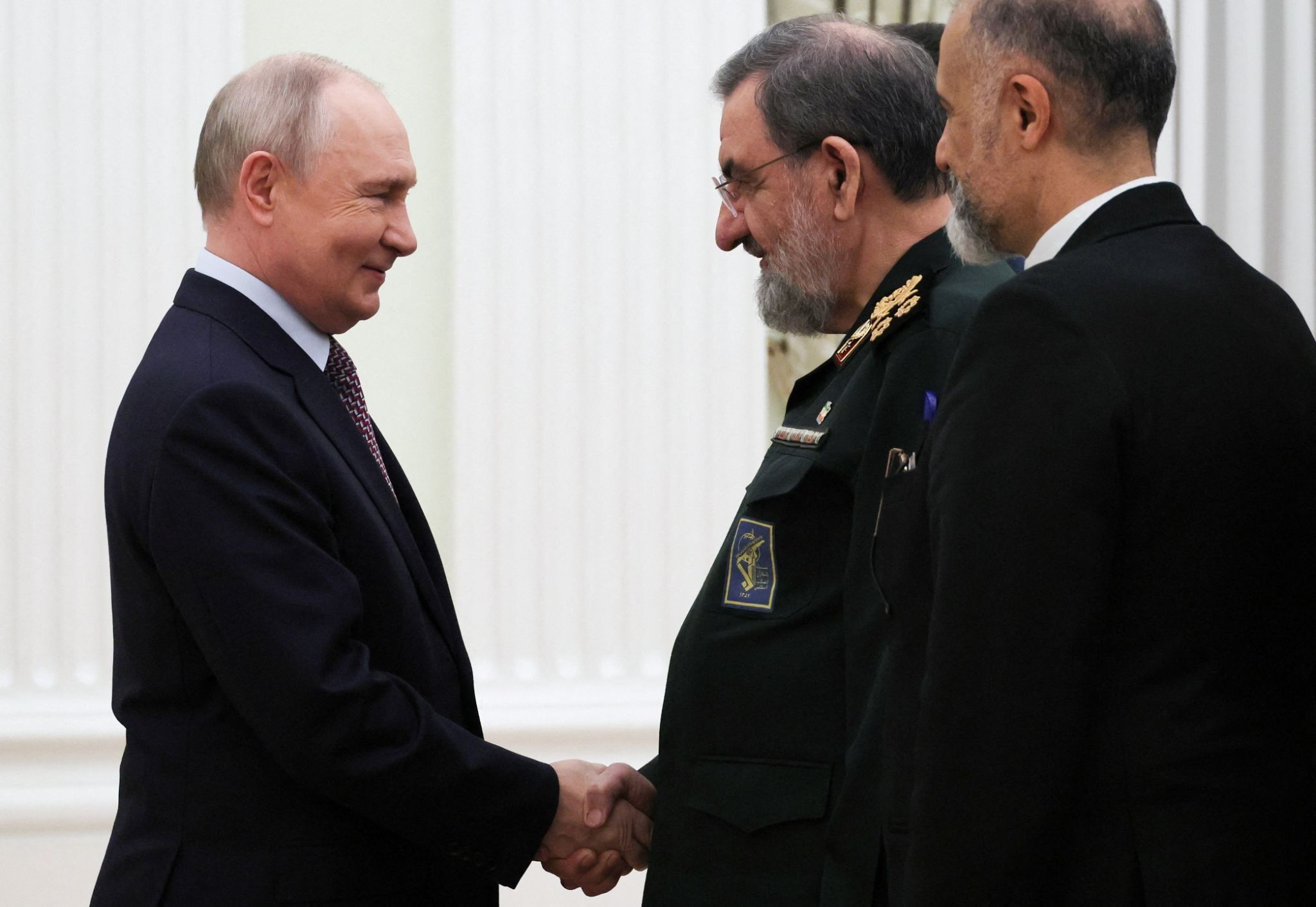
Washington risks misinterpreting Iran's 'peacemaker', according to analyst

Washington risks misinterpreting Iran's 'peacemaker', according to analyst

Mohsen Rezaei is reportedly seen by US intelligence as the figure best placed to deliver a deal across Tehran’s factious institutions.

Washington is at risk of mistaking Mohsen Rezaei’s new prominence for a willingness to make concessions, Iran analyst Alex Vatanka argues. The former Revolutionary Guards commander, now secretary of Iran’s Supreme National Security Council, has received a letter from US Vice President JD Vance and is reportedly seen by American intelligence as the figure best placed to deliver a deal across Tehran’s factious institutions. But Rezaei’s comeback owes little to public legitimacy — he lost four presidential bids and his economic ideas were widely mocked — and much to a leadership vacuum left by the war and a network of IRGC loyalists built over decades, Vatanka writes for the Saudi-owned magazine Al Majalla.

Rezaei has already shown the limits of his flexibility. He welcomed the letter’s tone, then insisted Washington accept Iran’s conditions first. Yesterday he went further, telling Al Mayadeen that not “a single speck” of enriched uranium would leave the country because Iran needs it to build nuclear-powered submarines — a rejection of the core US demand. His appointment was itself a product of hardline frustration: Rezaei was elevated by people close to Supreme Leader Mojtaba Khamenei who were unhappy with parliament speaker Mohammad Bagher Ghalibaf’s handling of the talks, a Crisis Group analyst told Radio Free Europe.

— Ed Clowes

In brief

Washington is at risk of mistaking Mohsen Rezaei’s new prominence for a willingness to make concessions, Iran analyst Alex Vatanka argues. Rezaei has already shown the limits of his flexibility. He welcomed the letter’s tone, then insisted Washington accept Iran’s conditions first. His appointment was itself a product of hardline frustration: Rezaei was elevated by people close to Supreme Leader Mojtaba Khamenei who were unhappy with parliament speaker Mohammad Bagher Ghalibaf’s handling of the talks, a Crisis Group analyst told Radio Free Europe. — Ed Clowes

This is the opening of the story, shared with credit to Semafor. The rest of the report — with every detail — continues on the publisher’s website.

Continue reading at Semafor ↗

Cookie settings

Choose which cookies we may use. You can change this at any time from Cookie settings in the footer. Details of each cookie are in the Cookie Policy.

Strictly necessary

Needed for sign-in, security, payments and remembering these choices. Always on.

Preferences

Remember settings such as dark mode.

Analytics & performance

Help us count visits, understand which pages, devices and countries our readers use, and measure how well the site performs – anonymous and aggregated.

Advertising & marketing

Lets advertising partners show and personalise adverts, measure impressions, clicks and visits, prevent ad fraud and pay us – this is how the free site is funded.

🔔 News notifications

Get headlines from NewsHub on this device — even when the site is closed.

You can switch this off at any time. Works on Android, Windows, Mac and Linux browsers; on iPhone/iPad add the site to your Home Screen first.