
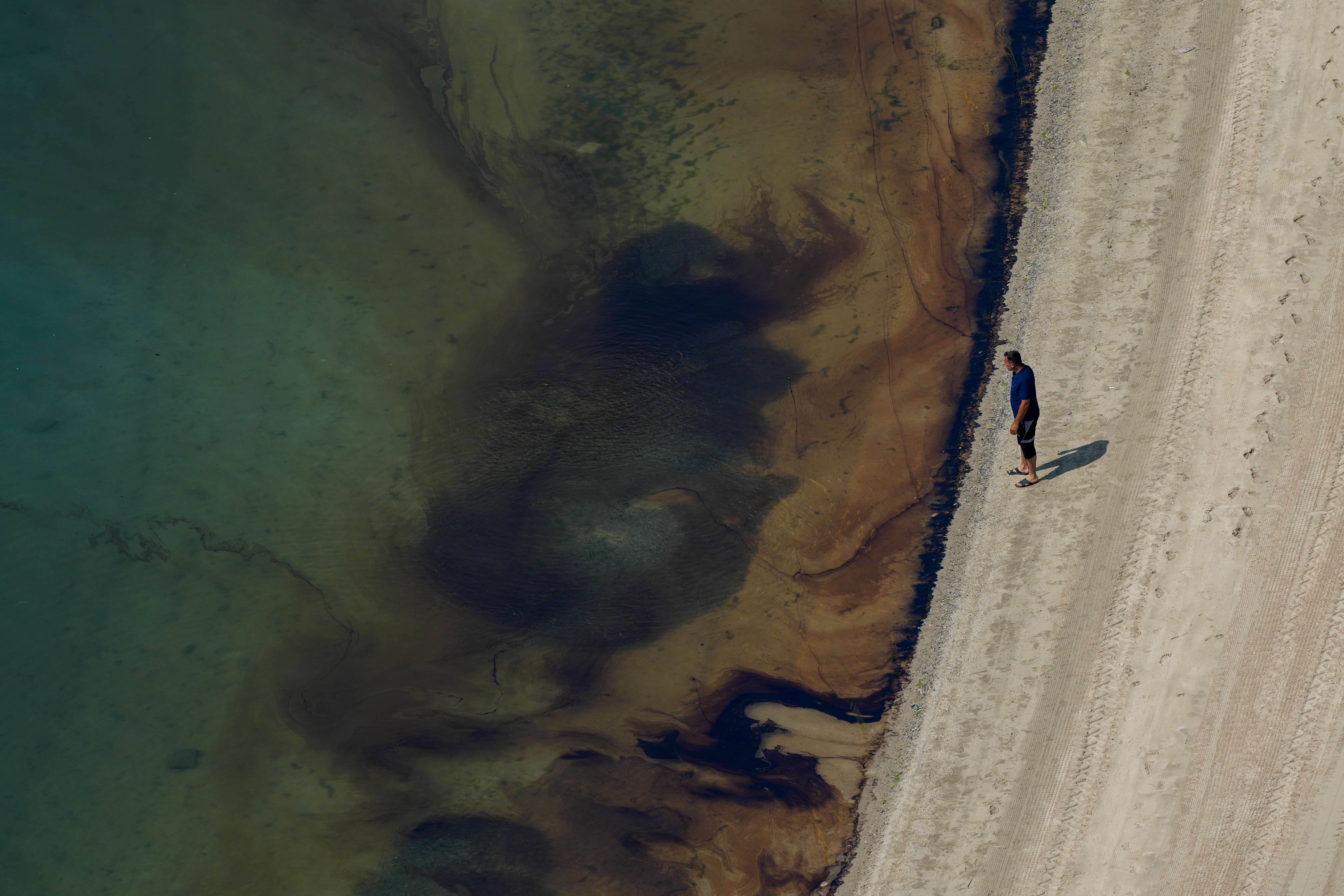
LONDON: Satellite images released this week reveal the shocking scale of oil spills in and around the Gulf caused by attacks on tankers since the Iran war began at the end of February.
The cost, say experts, is devastating — to fisheries, delicate marine environments and vulnerable species, economies reliant on tourism and, potentially, freshwater supplies dependent on coastal desalination plants.
More than 130 vessels are known to have been attacked in the Gulf and the Gulf of Oman since the Iran war began. Yet the true cost of the war at sea has not been fully appreciated.
Now Greenpeace, in collaboration with maritime tracking organization Kpler, has released data showing that since the conflict began on Feb. 28, no fewer than 540 oil slicks have been identified in the region.
An interactive map shows an almost continuous slick of oil running up the Gulf coast of the UAE from Dubai, around through the Strait of Hormuz and down the shores of Oman, as far south as Muscat.
“We want to highlight the accumulation of the really grave pollution that we are seeing in the Strait of Hormuz and the Gulf, because this is quite frankly an environmental disaster in the making,” Nina Noelle, an expert on environmental disaster relief at Greenpeace, told Arab News.
