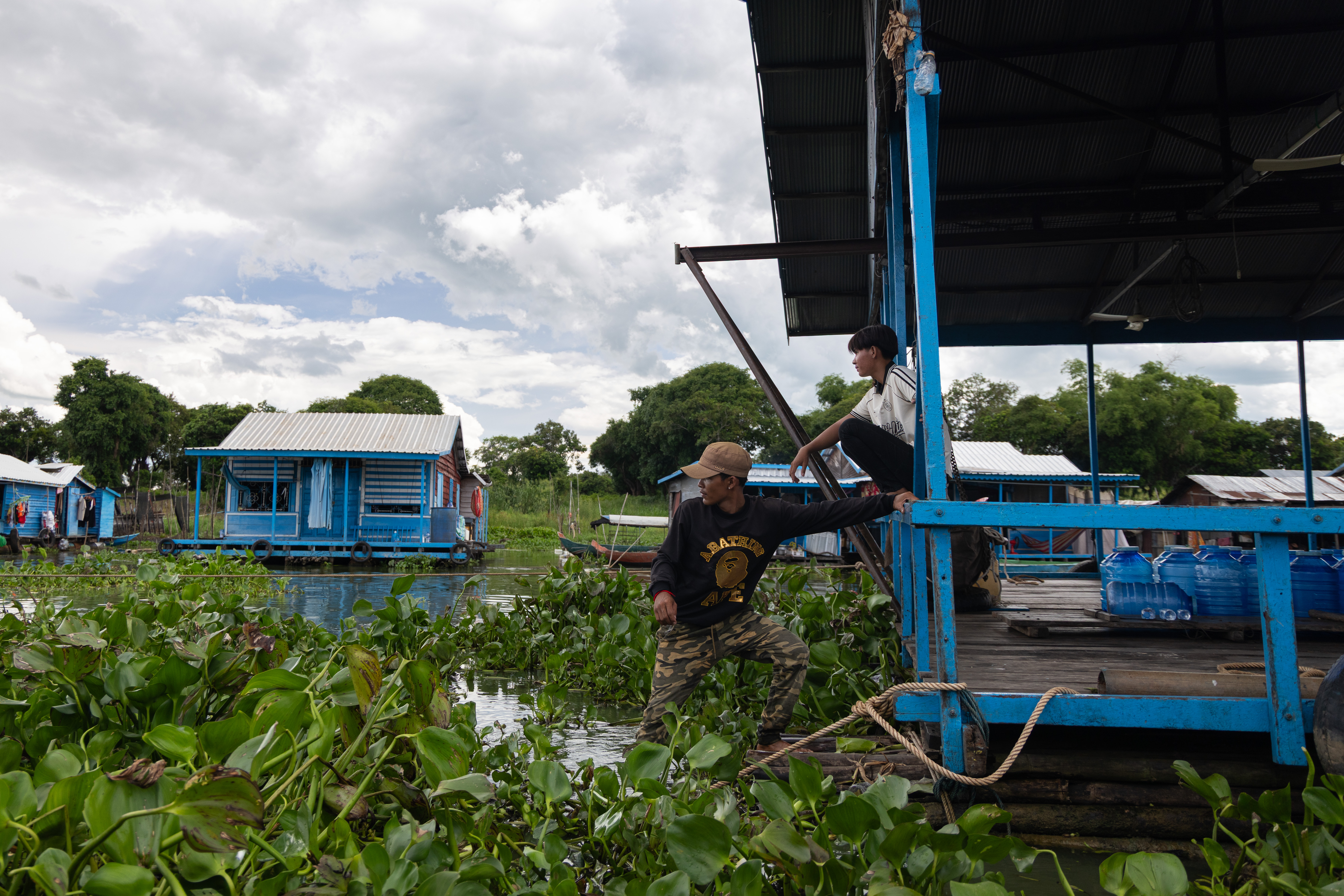
A way of life is disappearing on Cambodia’s Tonle Sap lake

A way of life is disappearing on Cambodia’s Tonle Sap lake

Communities around Cambodia’s Tonle Sap lake face a severe crisis due to El Niño, impacted by climate change, upstream dams, and rising costs. The future of these floating villages is increasingly uncertain.

CHONG KNEAS, Cambodia: At the edge of Cambodia’s great Tonle Sap lake, a wall of red, blue and yellow metal drums rises bright against the muddy water.

Meas Chou stockpiles these drums wherever he can and sells them to families who use them to keep their houses afloat on Southeast Asia’s largest lake. About 1.5 million people live on Tonle Sap, their homes rising and falling with the ebb and flow of the lake’s water levels.

This year’s record-breaking El Niño is predicted to bring hotter, drier weather across Southeast Asia, threatening both fisheries and farms. For Cambodia, which is already in a time of extreme drought, this could stunt Tonle Sap’s annual water flows from the Mekong River, which usually refill the lake each monsoon season.

In early October, the water level in the town of Prek Kdam — about halfway between the capital city of Phnom Penh and Tonle Sap — stood at nearly 7 meters (nearly 23 feet). That’s more than a meter below average and 1.5 meters (about 5 feet) lower than last year.

Lower water levels mean meager fish catches and less business for Chou. Higher fuel prices due to the Iran war also are hurting his sales and other aspects of life on the lake.

In brief

CHONG KNEAS, Cambodia: At the edge of Cambodia’s great Tonle Sap lake, a wall of red, blue and yellow metal drums rises bright against the muddy water. For Cambodia, which is already in a time of extreme drought, this could stunt Tonle Sap’s annual water flows from the Mekong River, which usually refill the lake each monsoon season. Lower water levels mean meager fish catches and less business for Chou.

This is the opening of the story, shared with credit to Arab News. The rest of the report — with every detail — continues on the publisher’s website.

Continue reading at Arab News ↗

Cookie settings

Choose which cookies we may use. You can change this at any time from Cookie settings in the footer. Details of each cookie are in the Cookie Policy.

Strictly necessary

Needed for sign-in, security, payments and remembering these choices. Always on.

Preferences

Remember settings such as dark mode.

Analytics & performance

Help us count visits, understand which pages, devices and countries our readers use, and measure how well the site performs – anonymous and aggregated.

Advertising & marketing

Lets advertising partners show and personalise adverts, measure impressions, clicks and visits, prevent ad fraud and pay us – this is how the free site is funded.

🔔 News notifications

Get headlines from NewsHub on this device — even when the site is closed.

You can switch this off at any time. Works on Android, Windows, Mac and Linux browsers; on iPhone/iPad add the site to your Home Screen first.