
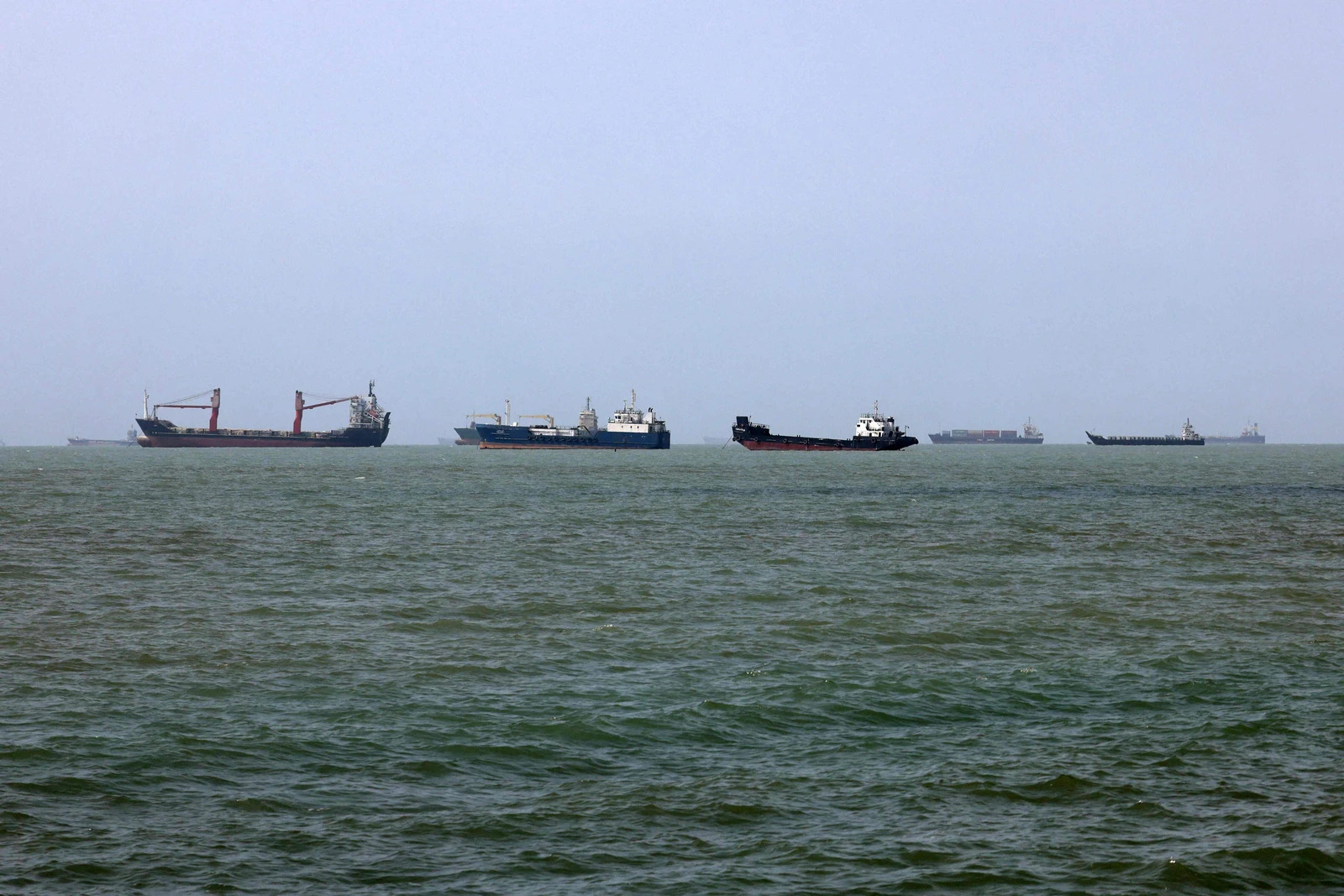
Adm. Brad Cooper, commander of US Central Command, last week announced Task Force Iron Gate, a new initiative designed to disrupt the movement of illicit goods across Iran’s land borders and the Caspian Sea. It complements the existing US naval blockade of Iranian ports.
But implementing Iron Gate will be no easy task, given the sheer length of Iran’s borders and the region’s difficult terrain and geography. Iran shares land borders with Iraq, Turkiye, Armenia, Azerbaijan, Turkmenistan, Afghanistan and Pakistan, totaling about 5,900 km. That is greater than the straight-line distance between Dubai and London.
Yet Cooper specifically included the Caspian Sea in the initiative. Notwithstanding the remote and porous sections of Iran’s land borders, especially with Afghanistan and Turkmenistan, stopping illicit shipments through Iranian ports on the Caspian will likely prove the greatest challenge.
The Caspian Sea is the world’s largest landlocked body of water, situated between Europe and Asia. Four countries besides Iran have coastlines on the Caspian: Azerbaijan, Russia, Kazakhstan and Turkmenistan. It is a resource-rich region holding large deposits of oil and gas. In recent years, the Caspian has been central to the Middle Corridor — an emerging east-west transport route on the Eurasian landmass.
Stopping illicit shipments through Iranian ports on the Caspian will likely prove the greatest challenge
