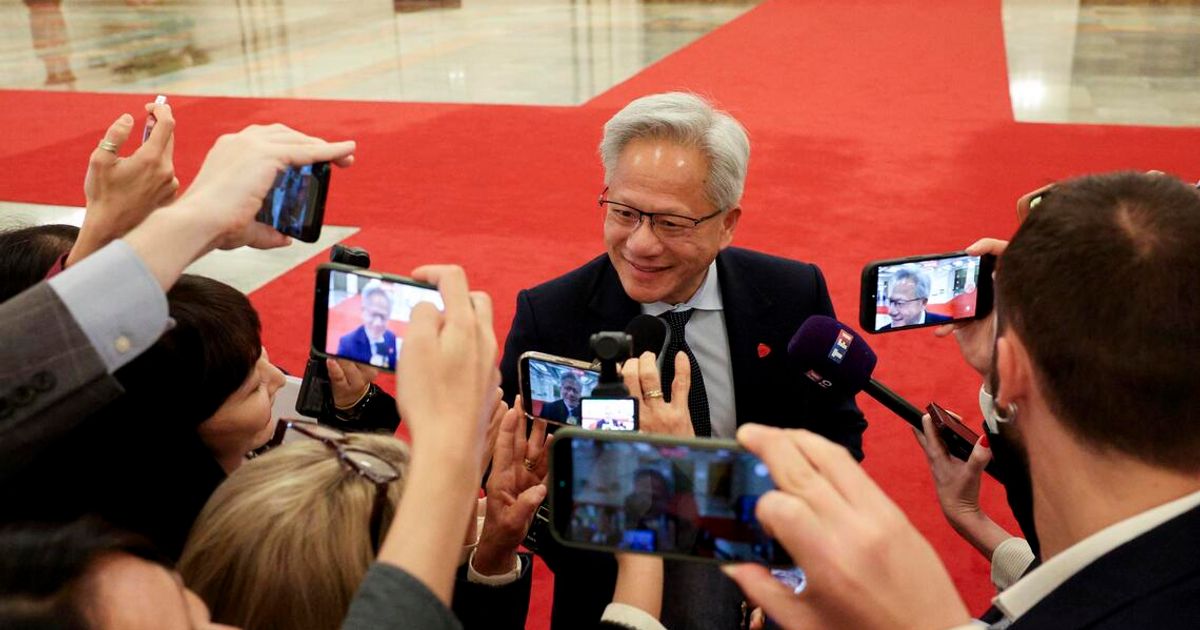
BEIJING – The abrupt resignation of Nvidia chief executive Jensen Huang has raised fresh questions about China’s access to advanced American artificial intelligence chips, with Beijing accusing Washington of using espionage allegations to justify tighter technology restrictions even as Chinese analysts play down the potential fallout.
Huang, who personally lobbied US President Donald Trump to ease restrictions on chip sales to China, was among the most vocal advocates for keeping American technology flowing to the world’s second-largest economy.
His departure now threatens to weaken that voice in Washington at a time when US lawmakers are pressing for stricter controls on China’s access to advanced computing power, potentially adding urgency to Beijing’s push for semiconductor self-sufficiency.
Chinese analysts said the consequences could cut both ways – further restrictions may constrain Chinese AI developers in the short term, while strengthening the push for domestic alternatives and creating opportunities for Chinese chipmakers such as Huawei.
Huang’s Nov 12 resignation followed revelations of extramarital affairs, including one involving a Chinese woman alleged by US officials to have links to Chinese intelligence. It marked the end of his 33-year tenure during which he built Nvidia into the world’s leading supplier of the chips that power AI.
He had long argued that excluding China from American chip technology would be counterproductive and would deprive US companies…