
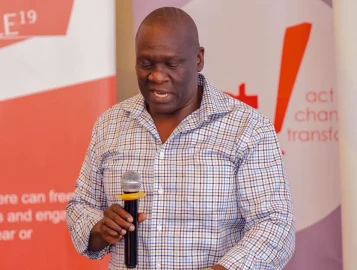
While civic knowledge stood at more than 76 per cent, actual civic behaviour was significantly lower at 33.7 per cent, pointing to challenges in translating awareness of civic rights into meaningful public participation.
A new report by Uraia Trust has revealed a significant gap between Kenyans' understanding of their civic rights and their participation in governance, with citizens scoring considerably lower on civic behaviour than on civic knowledge.
The 2026 Civic Education Competency Index, which covered 18 counties, recorded an overall score of 49.1 per cent.
While civic knowledge stood at more than 76 per cent, actual civic behaviour was significantly lower at 33.7 per cent, pointing to challenges in translating awareness of civic rights into meaningful public participation.
Uraia Trust is now calling for practical, action-oriented civic education to equip citizens with the knowledge and skills needed to engage in governance and hold public institutions accountable.
Team Leader for Governance and Health at the Embassy of Denmark in Kenya, Ida Paetau Sørensen, said an effective democracy requires more than citizens knowing the Constitution.
"A strong democracy doesn't depend on citizens knowing every article of the Constitution by heart. It depends on knowing that they have a voice, understanding how to use it, and having institutions that are prepared to listen," said Ida.
