
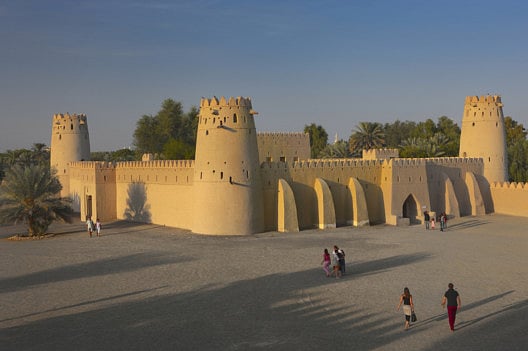
Al Ain: Beneath the mud plaster of Al Jahili Fort, hidden from every visitor, runs a network of chilled-water pipes. It is a quiet piece of engineering in a building that dates from the 1890s, and it exists for a simple reason: summer temperatures in Al Ain can reach 50°C.
The pipes are the heart of a 2007 conservation project that turned one of the UAE’s largest mud-brick forts into a year-round cultural destination, and won an international award for earthen architecture.
A summer retreat with a purpose
The fort was built on the orders of His Highness Sheikh Zayed bin Khalifa Al Nahyan, known as Zayed the First, who ruled Abu Dhabi from 1855 to 1909. Each summer the emirate’s rulers left the humid coast for Al Ain, with its drier air, fertile land and fresh water.
Sheikh Zayed owned a farm here, and the fort served both as his summer residence and as a means of keeping watch over the tribes of the area. Work began in 1891 and was completed in 1898.
An inscription over the south gate dates the inner square fort to this period. Alongside it stands a separate round tower of several tiers, each narrower than the one below. Together they are the oldest parts of the complex.
A history of many uses
