📰 Newspapers

‘Ahead of his time’: AI helps unlock discoveries hidden in notebooks of man who transformed maths

‘Ahead of his time’: AI helps unlock discoveries hidden in notebooks of man who transformed maths

Kurt Gödel left 1,009 pages of densely written text – much of it in an obsolete shorthand – which is now said to contain hundreds of proved theorems

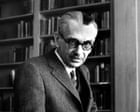
The Austrian logician Kurt Gödel was one of the most original thinkers of the 20th century. His two incompleteness theorems, published in 1931, transformed mathematics and paved the way for the digital age.

After his seminal results of the 1930s, Gödel published only a few papers. His unpublished work, however, runs to tens of thousands of pages, and is of great interest to historians of science.

Since 2017, the Finnish logician Jan von Plato has led a project at Helsinki University to understand the contents of 16 notebooks that Gödel wrote in the early 1940s. This material – the “workbooks” – is 1,009 pages of densely written text about maths and logic. Much of it is written in a German shorthand, Gabelsberger, that was obsolete even when Gödel was using it.

Progress in the mathematical understanding of the text was painfully slow – about a page a week – until September, when von Plato enlisted the help of the AI model Claude. Within a couple of days, Claude had provided a comprehensive digest of the entire material, revealing Gödel had proved hundreds of theorems that no one knew about.

In brief

Kurt Gödel left 1,009 pages of densely written text – much of it in an obsolete shorthand – which is now said to contain hundreds of proved theorems The Austrian logician Kurt Gödel was one of the most original thinkers of the 20th century. This material – the “workbooks” – is 1,009 pages of densely written text about maths and logic.

This is the opening of the story, shared with credit to The Guardian — World. The rest of the report — with every detail — continues on the publisher’s website.

Continue reading at The Guardian — World ↗

Cookie settings

Choose which cookies we may use. You can change this at any time from Cookie settings in the footer. Details of each cookie are in the Cookie Policy.

Strictly necessary

Needed for sign-in, security, payments and remembering these choices. Always on.

Preferences

Remember settings such as dark mode.

Analytics & performance

Help us count visits, understand which pages, devices and countries our readers use, and measure how well the site performs – anonymous and aggregated.

Advertising & marketing

Lets advertising partners show and personalise adverts, measure impressions, clicks and visits, prevent ad fraud and pay us – this is how the free site is funded.

🔔 News notifications

Get headlines from NewsHub on this device — even when the site is closed.

You can switch this off at any time. Works on Android, Windows, Mac and Linux browsers; on iPhone/iPad add the site to your Home Screen first.