
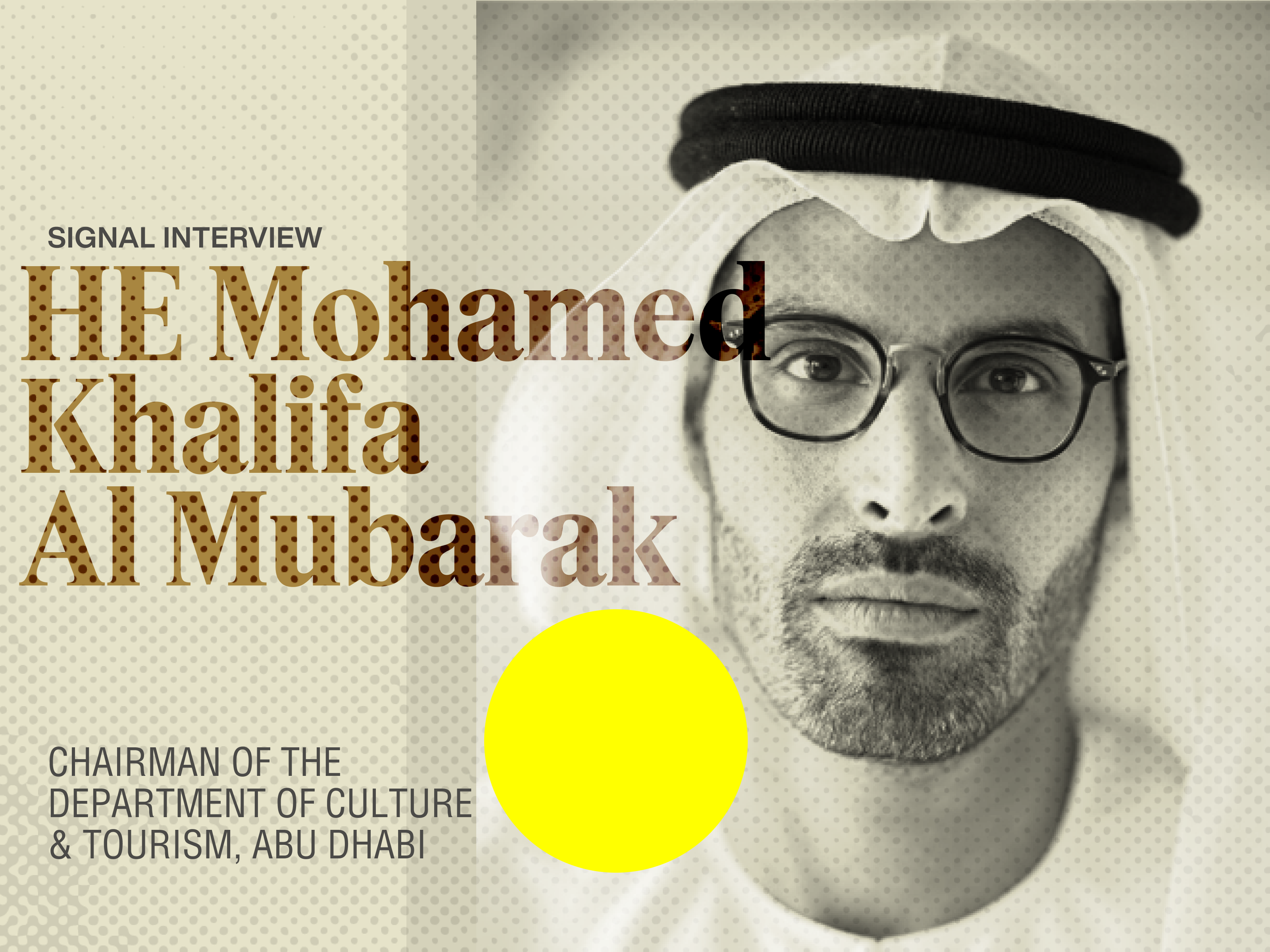
The Signal Interview
“We have plan A’s all the way to plan Z’s, from our best-case scenarios to our worst-case scenarios,” Mohamed Khalifa Al Mubarak says, when asked how the culture, tourism, and property groups he leads are preparing for what might happen next in the conflict that has shaken the Middle East.
Many of those plans are contingent on the US-Israeli conflict with Iran ending, but “if this conflict gets worse, we also have a very clear route,” says the chairman of the Department of Culture and Tourism Abu Dhabi.
The manga-loving 44-year-old member of Abu Dhabi’s Executive Council, whose other interests include sneakers, rap music, and basketball, has spent more than a decade at the heart of the city’s strategy to diversify its economy using museums, UFC fights, and theme parks. Last year alone, the city opened five museums and welcomed a record 26.6 million visitors.
Culture and tourism are “the building blocks of our future,” he says. But the conflict has forced him to craft a response that combines a strategic pivot, reassurance to local staff and foreign partners, and continued commitment to his city’s long-term aims.
When the Iran war started in February, flights and events were canceled and the number of Western tourists to the Gulf plunged, emptying local hotels.
