
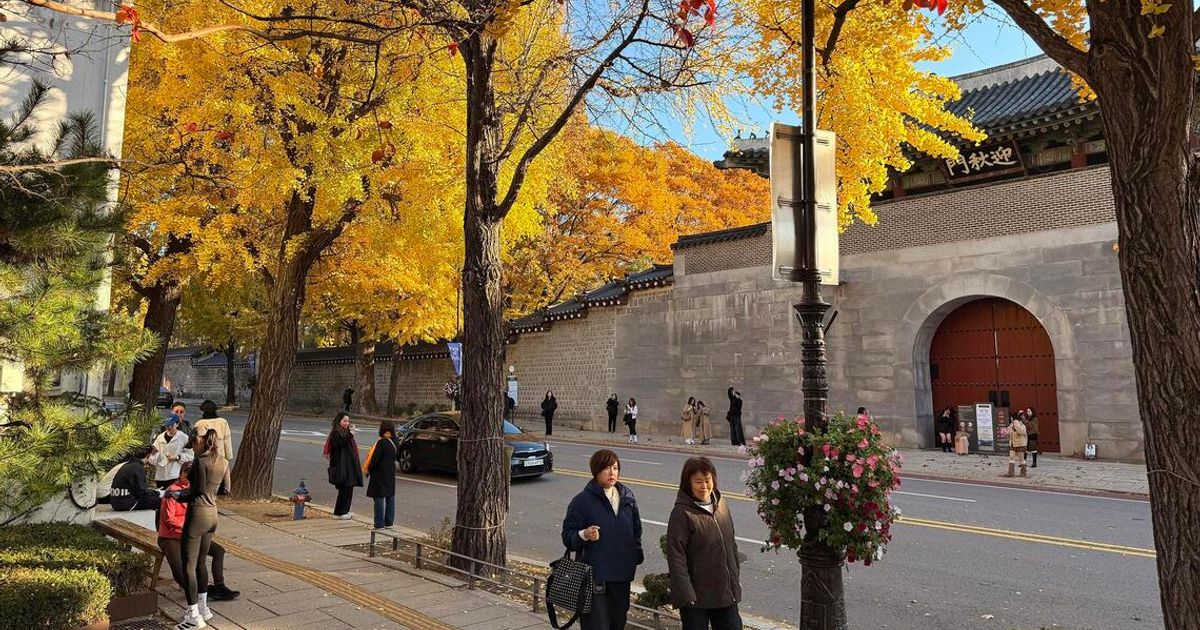
SEOUL - Autumn is in full swing in Seoul, where ginkgo trees are laden with golden foliage, their delicate leaves fluttering to the ground with every gust of wind and carpeting the streets in yellow.
But beneath this picturesque canopy lies a less pleasant reality – a stink that has been likened to dog poop, vomit or sweaty socks.
The foul odour comes from the fleshy outer coat of fallen ginkgo seeds. When crushed, the pulp releases two pungent compounds. One is butyric acid, which is found in vomit and rancid butter, and the other is hexanoic acid, known for its cheesy odour.
This fleshy outer coating surrounds a hard, shell-like layer, beneath which lies the edible ginkgo kernel, which would be more familiar to Singaporeans as one of the key ingredients in the traditional dessert soup cheng tng.
Only female ginkgo trees produce the fleshy, foul-smelling seeds, while male trees produce pollen but do not bear fruit.
In Seoul, where the ginkgo biloba species account for nearly one in three street trees, the pungent smell of its fruit that permeates city sidewalks every autumn season has sparked a different kind of stink this year.
While district authorities have been gradually replacing female trees with male ones in response to residents’
