
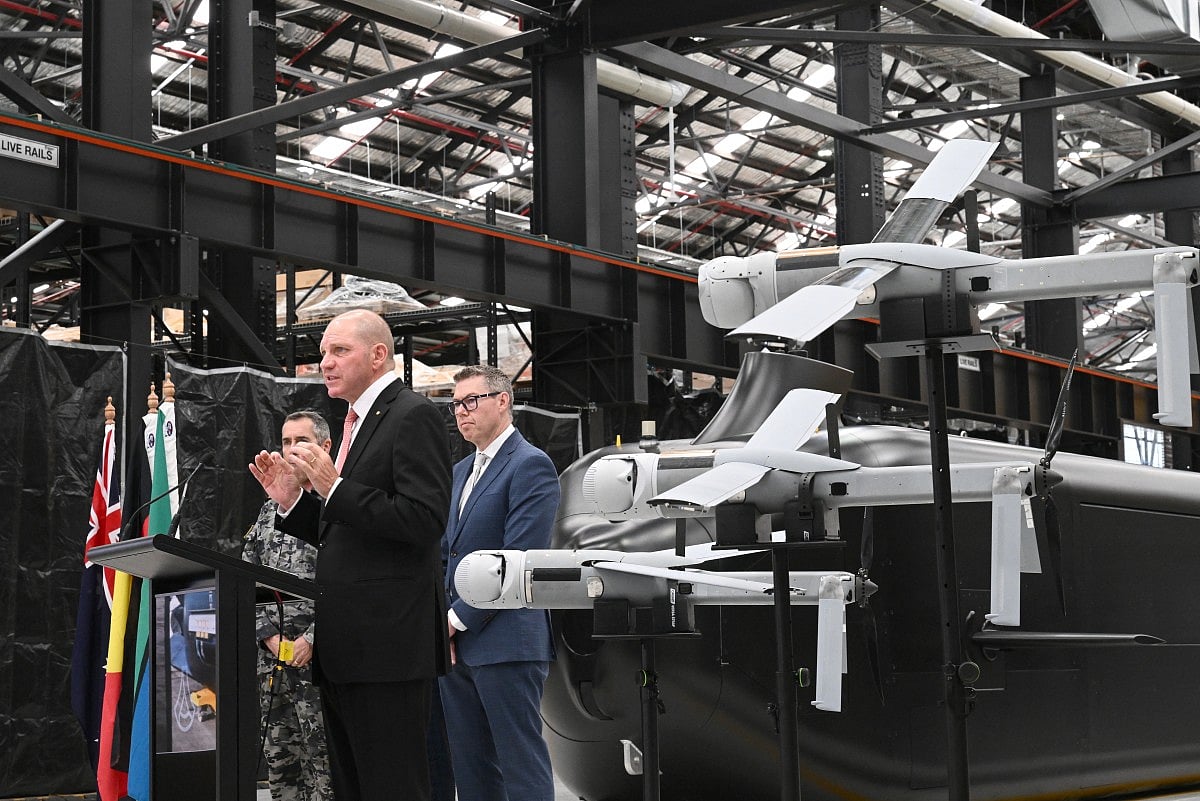
Paris: Lethal autonomous weapons powered by artificial intelligence are set to revolutionise warfare but there is no proper regulatory or legal framework governing the new technology.
A conference starting Monday at the United Nations in Geneva will discuss how to establish curbs and prohibitions on such weapons, called killer robots by some.
But some analysts doubt the discussions at the Convention on Certain Conventional Weapons (CCW) will keep pace with the fast-changing weapons.
AFP looks at three key questions ahead of the conference.
What are LAWS?
Lethal Autonomous Weapons Systems (LAWS) "can identify, select, and engage a target without the intervention of a human operator in the execution of these tasks," said Jean-Marc Rickli, head of global and emerging risks at the Geneva Centre for Security Policy.
Autonomous weapons have long existed. An anti-personnel mine "is an autonomous weapon in the sense that it explodes when someone steps on it," said Laure de Roucy-Rochegonde of the Centre for Geopolitics of Technology at the French Institute of International Relations (IFRI).
But with the proliferation of AI-enhanced drones, such weapons are now "capable of selecting and engaging a target that was not predetermined, adapting to their environment without human intervention," said Rickli.
Get updated faster and for FREE: Download the Gulf News app now - simply click here.
