The EU has assembled an impressive toolkit for critical minerals engagement in Africa: 15 partnership agreements, 60 strategic project designations worldwide, a corridor strategy linking the Democratic Republic of Congo and Zambia to Angola’s Atlantic port, and a financing architecture that spans the European Investment Bank, the European Bank for Reconstruction and Development, and Global Gateway.
The political commitment is genuine. The institutional density is real.
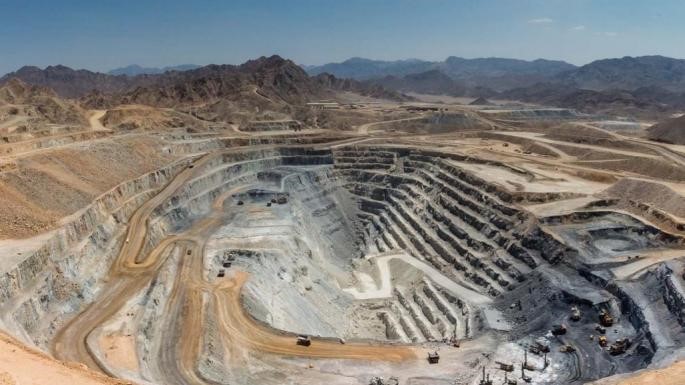
However, the measure of success for any minerals strategy sits at the refinery gate, and Europe’s African pipeline remains thin at precisely the point where value is created and dependence is broken. China refines roughly 79 percent of the world’s cobalt and controls around 90 percent of rare earth processing capacity. The DRC mines about 74 percent of global cobalt, but refines less than 5 percent of its own output. Europe’s four African strategic projects under the Critical Raw Materials Act — Zandkopsdrift in South Africa, Songwe Hill in Malawi, Maniry in Madagascar, and Kobaloni in Zambia — are meaningful proof that the model can work.
They are also, in aggregate, a rounding error against the chokepoint.
China’s advantage lies in vertical integration
Firstly, the Kobaloni cobalt sulfate refinery shows both the promise and the scale of the problem.