

Some of the world's healthiest marine ecosystems may still exist in places so remote that human activity has had little influence on their wildlife and habitats. Scientists surveying two isolated Pacific atolls have documented thriving seabird colonies, green sea turtle nesting grounds, diverse fish communities and extensive coral reefs. The findings offer a rare picture of what relatively undisturbed tropical ocean ecosystems can look like.The findings come from a study published on November 11, 2026, in Frontiers in Marine Science, titled From the sky to the deep sea: ecosystem structure and ecological integrity across the National Marine Sanctuaries of Bikar and Bokak, Marshall Islands. The research, led by marine ecologist Dr Alan Friedlander of the University of Hawai'i, examined ecosystems across two remote atolls in the Marshall Islands. The assessment also provides an ecological benchmark for the country's first national marine sanctuaries, covering approximately 48,136 square kilometres around the islands.Two remote atolls with thriving wildlifeThe researchers studied Bikar and Bokak, the northernmost atolls in the Republic of the Marshall Islands. Both are uninhabited and geographically isolated from major population centres. Bikar lies approximately 116 kilometres from Utrik, the nearest inhabited atoll, while Bokak is around 385 kilometres away. Their remoteness has helped preserve ecosystems that have experienced relatively little direct human pressure.The research team conducted an extensive expedition in 2023…
Pacific survey finds 15 breeding seabird species, 132 turtle nests and two unusual fish observations
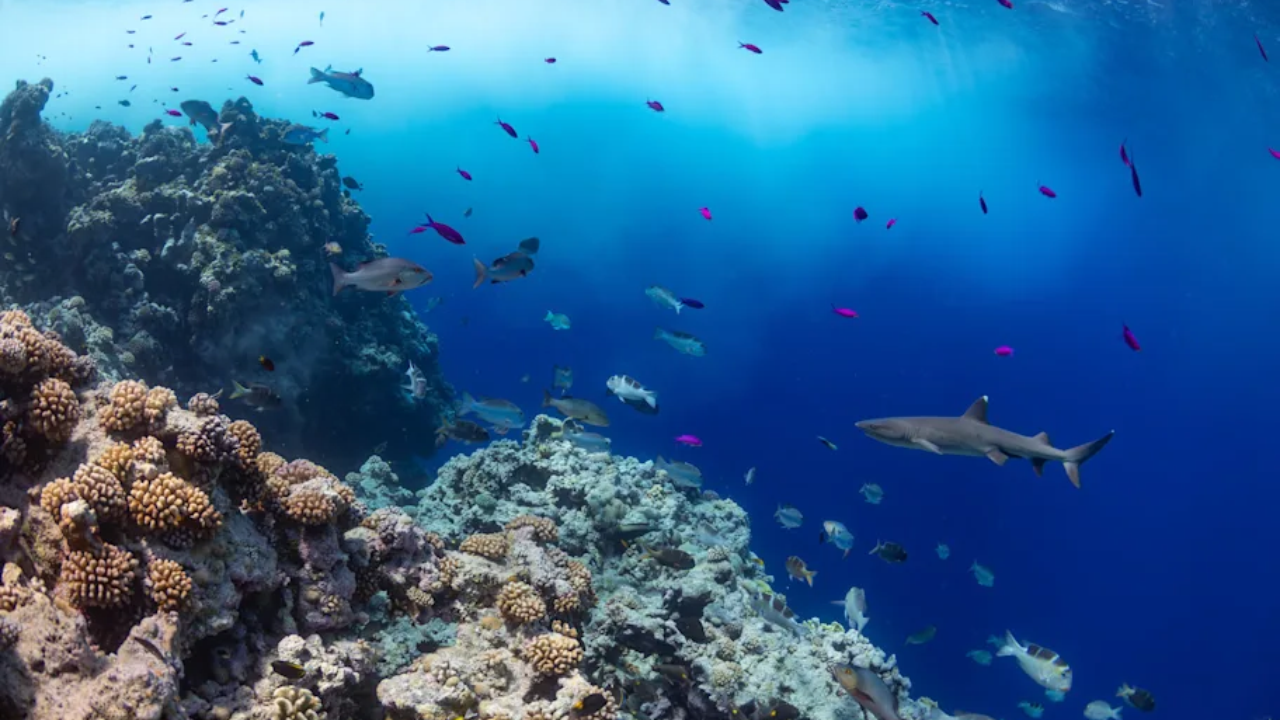
Researchers have unveiled the rich marine biodiversity of the isolated atolls of Bikar and Bokak in the Marshall Islands. Their exploration discovered robust populations of seabirds and active green sea turtle nesting grounds. Additionally, they identified a wide range of fish species across reef and deep-sea environments, including possible new species.
In brief
Some of the world's healthiest marine ecosystems may still exist in places so remote that human activity has had little influence on their wildlife and habitats. Scientists surveying two isolated Pacific atolls have documented thriving seabird colonies, green sea turtle nesting grounds, diverse fish communities and extensive coral reefs. The assessment also provides an ecological benchmark for the country's first national marine sanctuaries, covering approximately 48,136 square kilometres around the islands.Two remote atolls with thriving wildlifeThe researchers studied Bikar and Bokak, the northernmost atolls in the Republic of the Marshall Islands.
This is the opening of the story, shared with credit to The Times of India — World. The rest of the report — with every detail — continues on the publisher’s website.
Continue reading at The Times of India — World ↗