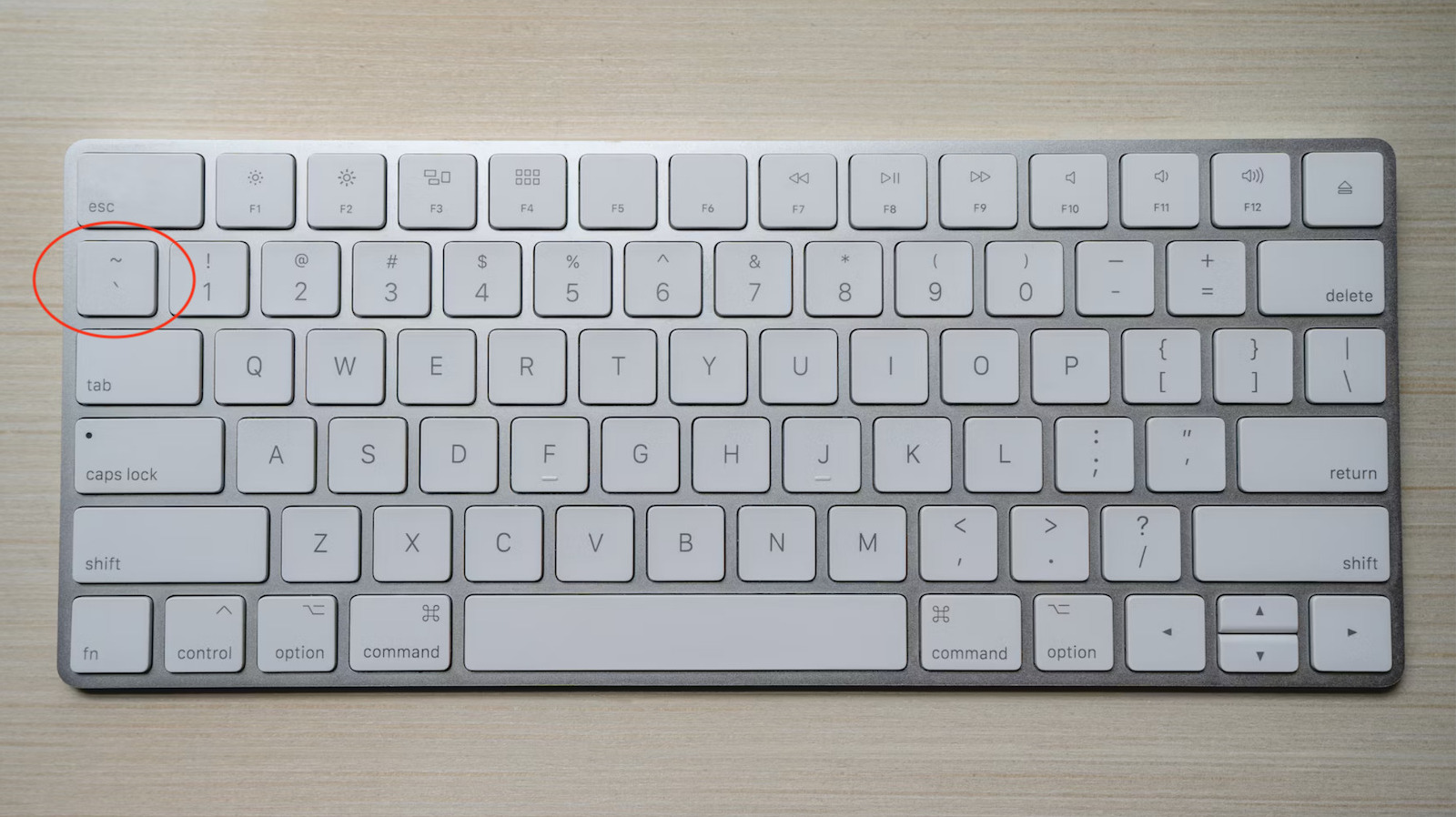
The humble tilde (~) symbol, which is located left of the "1" key, has a few notable uses. It can represent approximations, which is useful in mathematics and statistics, and is found as an accent over letters in languages like Spanish and Portuguese. You've probably spent some time hunting for it on a keyboard when spelling stuff like "mañana." However, its primary use on a computer keyboard is as a tool in programming languages C, C++ and Java, among many others.
This has actually been a handy little key going back decades. It first appeared on computer keyboards all the way back in 1965, back in the days of massive mainframes. It has since become a mainstay of modern keyboards. The meaning of the symbol depends entirely on the programming language, and even game developers find a variety of uses for it. Let's get into what coders are using the tilde for.
This is likely the most common use of the tilde symbol when it comes to programming, as this method is the same in Javascript, C, C++, Python and several other computing languages. The bitwise NOT operator (yes it's spelled that way) inverts all the bits of a binary number. This means that all zeroes become ones and all ones become zeroes. For instance, "0010" would become "1101."