Not all findings in history lead us to an answer; some leave us grappling with even more questions. Human remains have long opened up a range of curious questions: what happened, why, and who were these people? More often than not, they open the pathway for researchers to learn what beliefs and traditions shaped community life and even death.But sometimes, what appears to be a familiar archaeological finding can turn out to tell a rather different story. This was the case with a collection of 165 human skulls discovered inside a cave in Chiapas, Mexico, in 2012. At first associated with the ancient Maya practice of displaying human skulls, the remains have now offered researchers a more complicated picture of the people who were part of these ceremonies, with women and children forming a significant part of this collection.A discovery inside a cave in ChiapasAccording to findings from Mexico's National Institute of Anthropology and History (INAH), reported by Arkeonews on November 6, 2026, the discovery was made in the Frontera Comalapa region of Chiapas, close to Mexico's border with Guatemala. When the human skulls were first encountered inside the cave in 2012, their presence raised questions about the circumstances in which they had been brought together.
When people entered a cave in Chiapas, Mexico, in 2012, they found 165 human skulls
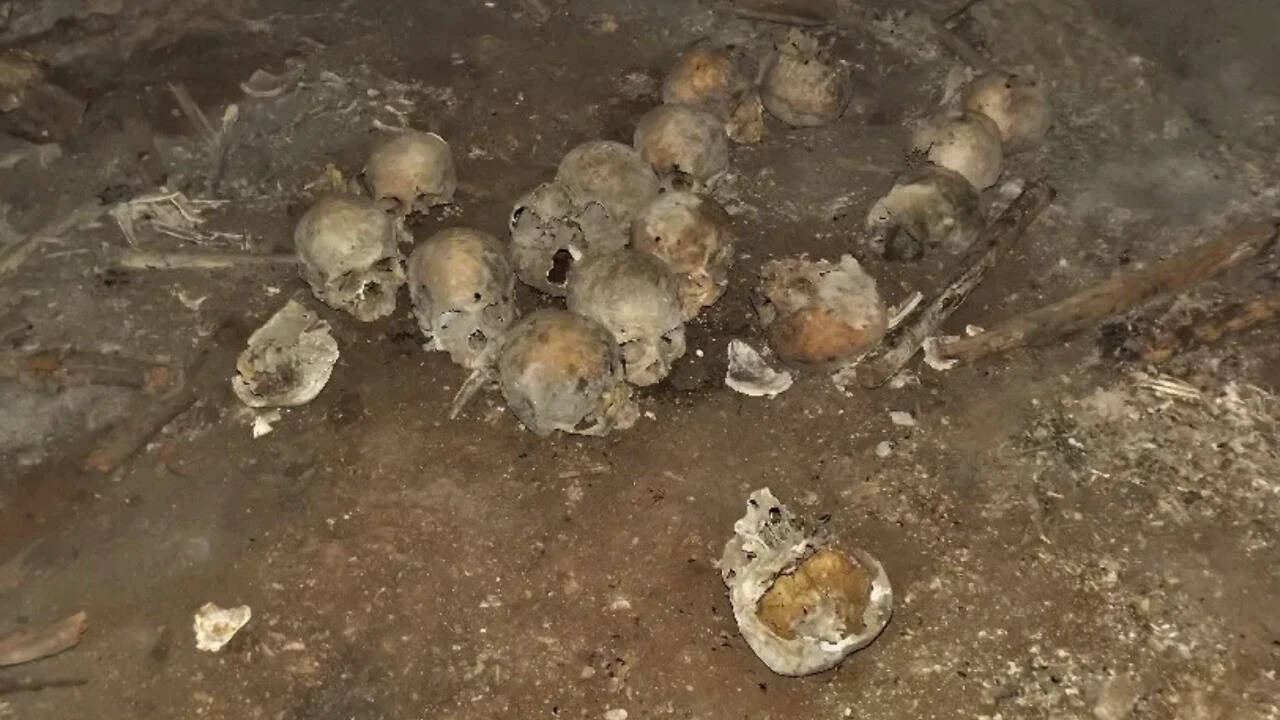
In a remarkable discovery, a total of 165 human skulls was unearthed in a cave located in Chiapas, Mexico, shedding light on ancient Mesoamerican rituals. Dating back around 1,000 years to the Early Postclassic period, these remains included notably women and children. The research indicates that the cave could have served as a pilgrimage site, reflecting a sophisticated system of rituals connected to ancient Maya…
In brief
Not all findings in history lead us to an answer; some leave us grappling with even more questions. This was the case with a collection of 165 human skulls discovered inside a cave in Chiapas, Mexico, in 2012. When the human skulls were first encountered inside the cave in 2012, their presence raised questions about the circumstances in which they had been brought together.
This is the opening of the story, shared with credit to The Times of India — World. The rest of the report — with every detail — continues on the publisher’s website.
Continue reading at The Times of India — World ↗