

We often look back in time through the eyes of the victors, the rulers and the elite. Even in their funerals, they are commemorated as such so we learn a lot about them. Sometimes, we learn about the past through ordinary men and women, discovering their stories and lives.Rarely do we find stories from babies. Their lives are often too brief to leave behind much of a historical record, and their remains can tell us only so much. In southern Peru, archaeologists discovered the remains of two infants buried together in a ceramic vessel. One of them had a single eye socket in the centre of her face, a rare congenital condition known as cyclopia. Now, researchers have used ancient DNA to identify the genetic condition behind it, revealing an extraordinary piece of the history of human development.The discovery, published in the journal Proceedings of the National Academy of Sciences (PNAS), offers a rare opportunity to understand a congenital condition that has left little evidence in the archaeological record. It also raises questions about the lives of two infants who were laid to rest together more than 1,600 years ago.Two infants, one burialThe remains were discovered at Jauranga, an archaeological site in Peru's Palpa Valley, a region associated with the ancient Nasca civilisation.
2 Infants buried in Peru about 1,600 years ago; one had a rare fatal birth defect called cyclopia
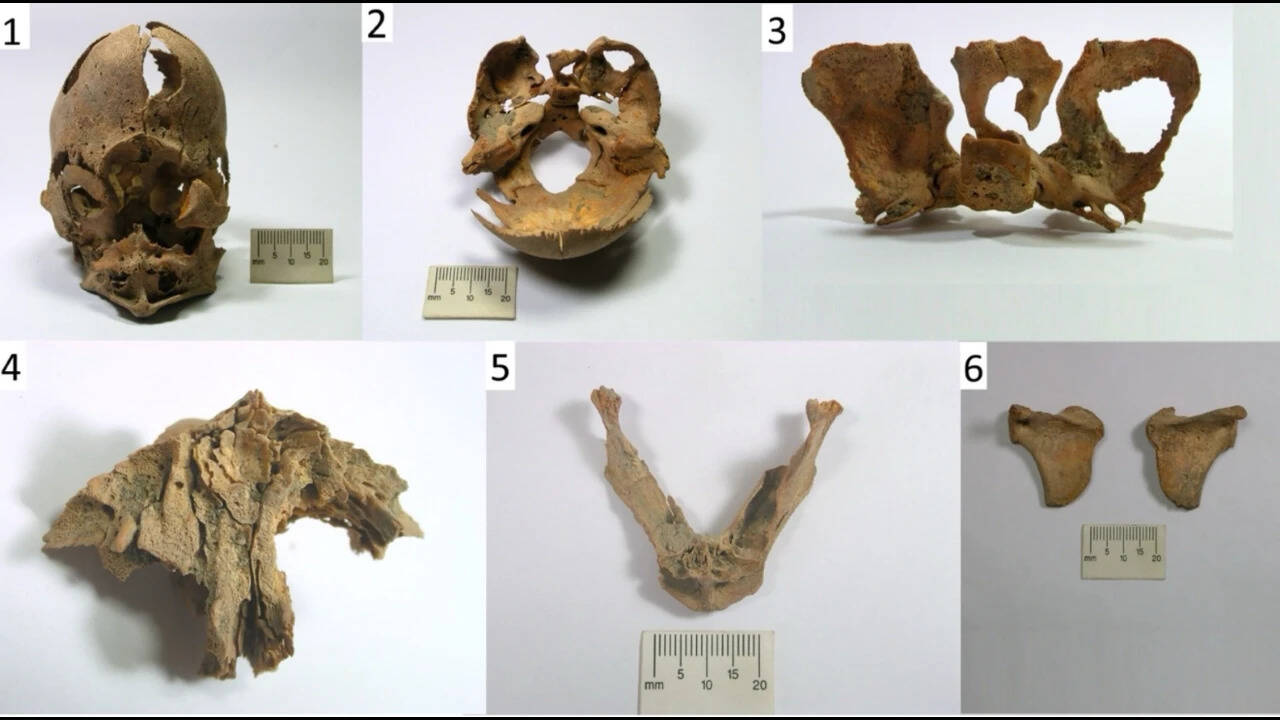
In southern Peru, archaeologists uncovered the remains of two infants buried together, one exhibiting cyclopia. Genetic analysis confirmed that the infant with cyclopia had trisomy 13, a chromosomal condition. Their burial in a single ceramic vessel reveals insights into ancient funerary practices. Researchers highlighted that the infant's condition did not result in unusual treatment in life or death. This…
In brief
We often look back in time through the eyes of the victors, the rulers and the elite. In southern Peru, archaeologists discovered the remains of two infants buried together in a ceramic vessel. It also raises questions about the lives of two infants who were laid to rest together more than 1,600 years ago.Two infants, one burialThe remains were discovered at Jauranga, an archaeological site in Peru's Palpa Valley, a region associated with the ancient Nasca civilisation.
This is the opening of the story, shared with credit to The Times of India — World. The rest of the report — with every detail — continues on the publisher’s website.
Continue reading at The Times of India — World ↗