Antoninus Pius was a Roman emperor, specifically the fourth of the Five Good Emperors, who ruled from AD 138 to 161. His reign was marked by relative peace and stability across the Roman Empire, alongside administrative and legal reforms. However, one of his more ambitious undertakings was expanding Rome's territory further north into Scotland, a campaign that resulted in the construction of the Antonine Wall.The emperor's legacy was not limited to the territories he conquered or the policies he introduced. Like many Roman rulers, Antoninus Pius also had monuments and statues erected in his honour, celebrating his achievements and reinforcing his authority across the empire. One such monument may have been a towering, gilded bronze statue of the emperor riding a horse, which is believed to have once stood in southern Scotland.But if the Romans had gone to such lengths to immortalise their emperor, why was the statue eventually taken apart? A bronze leg discovered in a Scottish bog more than 200 years ago may finally offer some answers. Ahead of the Roman Scotland: Life on the Edge of Empire, an exhibition at the National Museum of Scotland, the museum has released a statement regarding the same.
A bronze leg found in 1820 considered Roman loot now believed to belong to a statue of Antoninus Pius
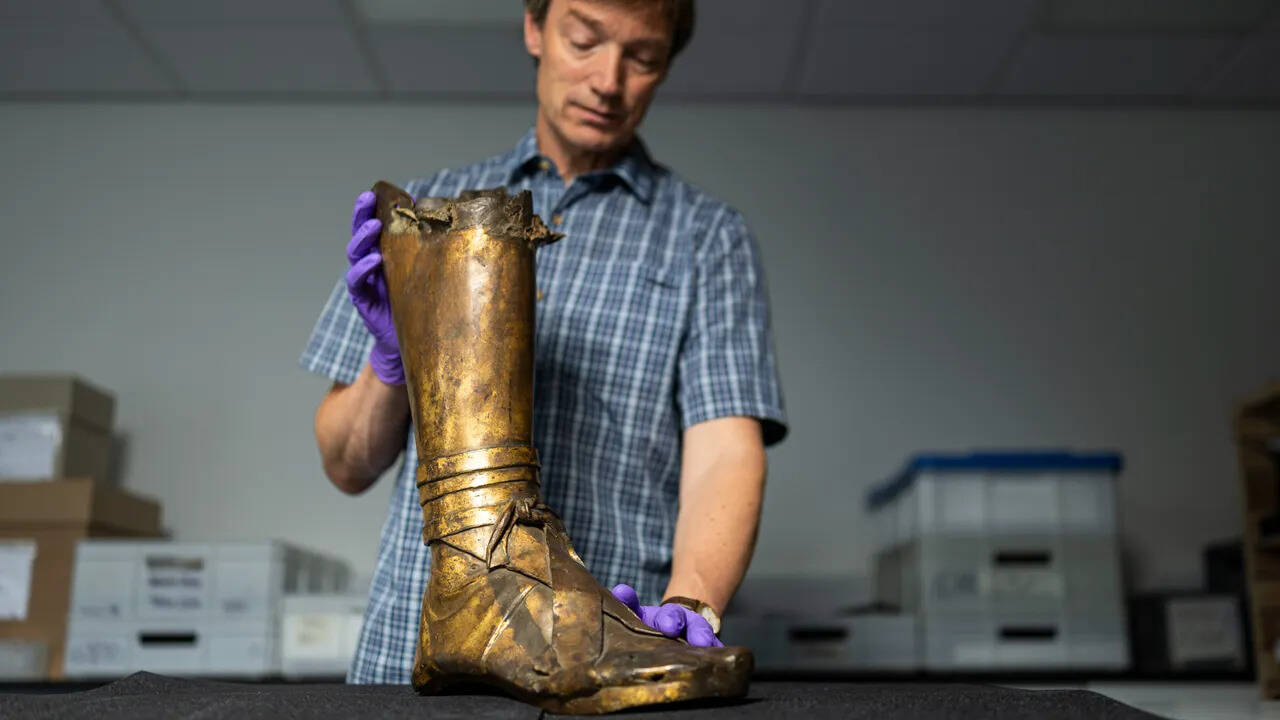
Emperor Antoninus Pius, celebrated for his peace-driven rule and military expeditions, may have a newly discovered connection to history. A bronze leg unearthed in Scotland suggests a statue that honored him was disassembled by Roman forces prior to their withdrawal in AD 161, challenging prior beliefs of theft. This discovery sheds light on how Rome strategically managed its monuments, and further archaeological…
In brief
Antoninus Pius was a Roman emperor, specifically the fourth of the Five Good Emperors, who ruled from AD 138 to 161. His reign was marked by relative peace and stability across the Roman Empire, alongside administrative and legal reforms. Like many Roman rulers, Antoninus Pius also had monuments and statues erected in his honour, celebrating his achievements and reinforcing his authority across the empire.
This is the opening of the story, shared with credit to The Times of India — World. The rest of the report — with every detail — continues on the publisher’s website.
Continue reading at The Times of India — World ↗