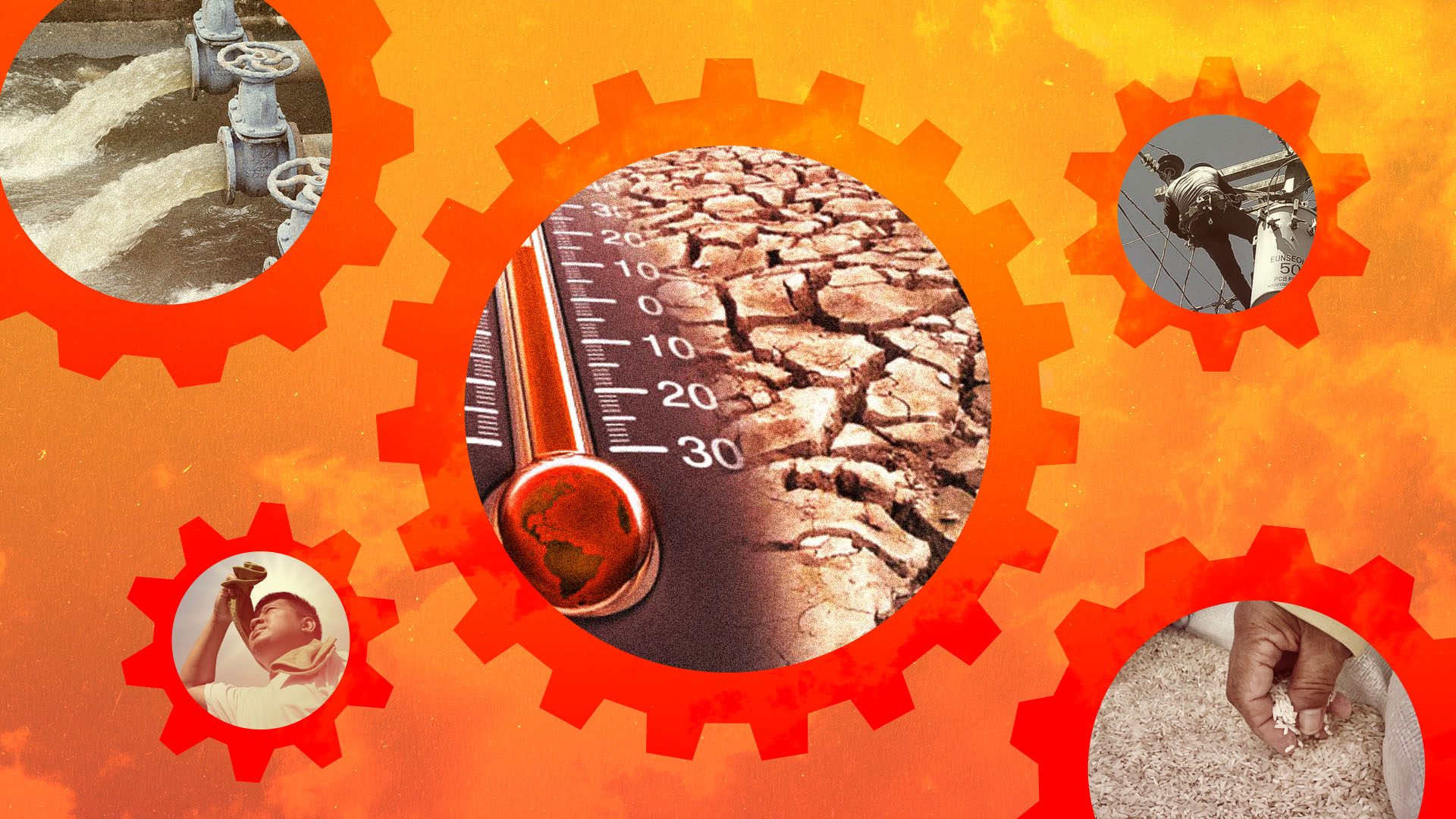
A “very strong” Super El Niño is underway, and government agencies and the public should be on the lookout, the Philippine Atmospheric, Geophysical and Astronomical Services Administration (PAGASA) warned.
According to the weather agency, several parts of the country will experience below-normal rainfall and drought starting this November.
Ahead of PAGASA’s announcement, President Ferdinand Marcos Jr. directed concerned government agencies to take necessary measures to prepare for the impacts of the weather phenomenon. Task Force El Niño also said the country has allocated P7.7 billion for its El Niño response.
So what measures has the Marcos administration put in place against Super El Niño?
Irrigation, water management
The Department of Environment and Natural Resources (DENR) has established water impounding structures and rainwater harvesting systems to boost water supply and prepare for potential forest and grass fires, which have a higher probability during El Niño.
The Department of Social Welfare and Development (DSWD) is also helping with community-based interventions by rehabilitating water sources, such as reservoirs, multipurpose water infrastructure, and water harvesting facilities, through Project LAWA (Local Adaptation to Water Access).
For its part, the Department of Agriculture (DA) is assessing irrigation systems and helping farmers adjust planting schedules based on local weather and water conditions.
The National Irrigation Administration will strengthen and rehabilitate some of its solar-powered pumps.