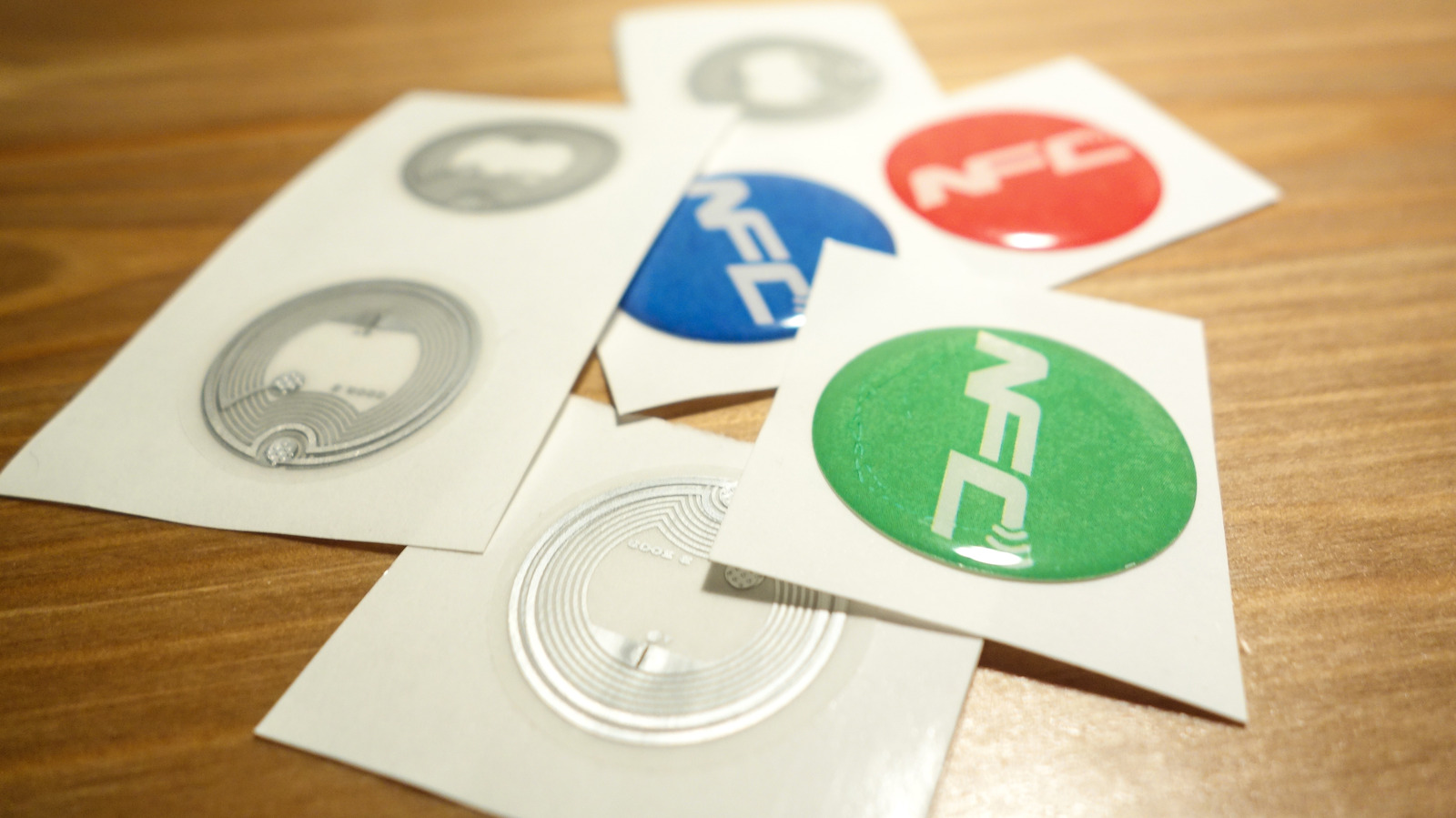
Some people think they're just thin AirTags, but they're not.
If you've stayed at a hotel in the past five years, chances are you've noticed that room keys have changed. Some of them are now credit-card-sized pieces of wood that somehow communicate with the door, while other hotels also allow you to use your phone to unlock the door. Some allow both. This is all thanks to NFC, which is like the slick and cool child of RFID technology (the tech used in pet microchips, among other things).
NFC works at a much shorter range than RFID, which actually makes it more secure, and it can talk both ways, which is the reason your phone can now act as the key. The NFC tags themselves are now so thin and cheap to produce that you can purchase a pack of several dozen NFC stickers for just a few dollars.
But what exactly is an NFC tag, what is it good for, and should you be careful with it?
NFC stands for near-field communication, and much like Bluetooth or Wi-Fi, it is a wireless radio standard that allows different devices to exchange information with each other, just like RFID.