Ethiopia’s decision to ban imports of new petrol and diesel cars in 2024 was less a climate policy than an economic survival strategy.
With fuel imports costing billions annually and the country defaulting on its debt, Addis Ababa turned to cheap hydropower and Chinese-made electric vehicles to cut its dependence on oil.
The result is one of the world’s most radical transport experiments. B
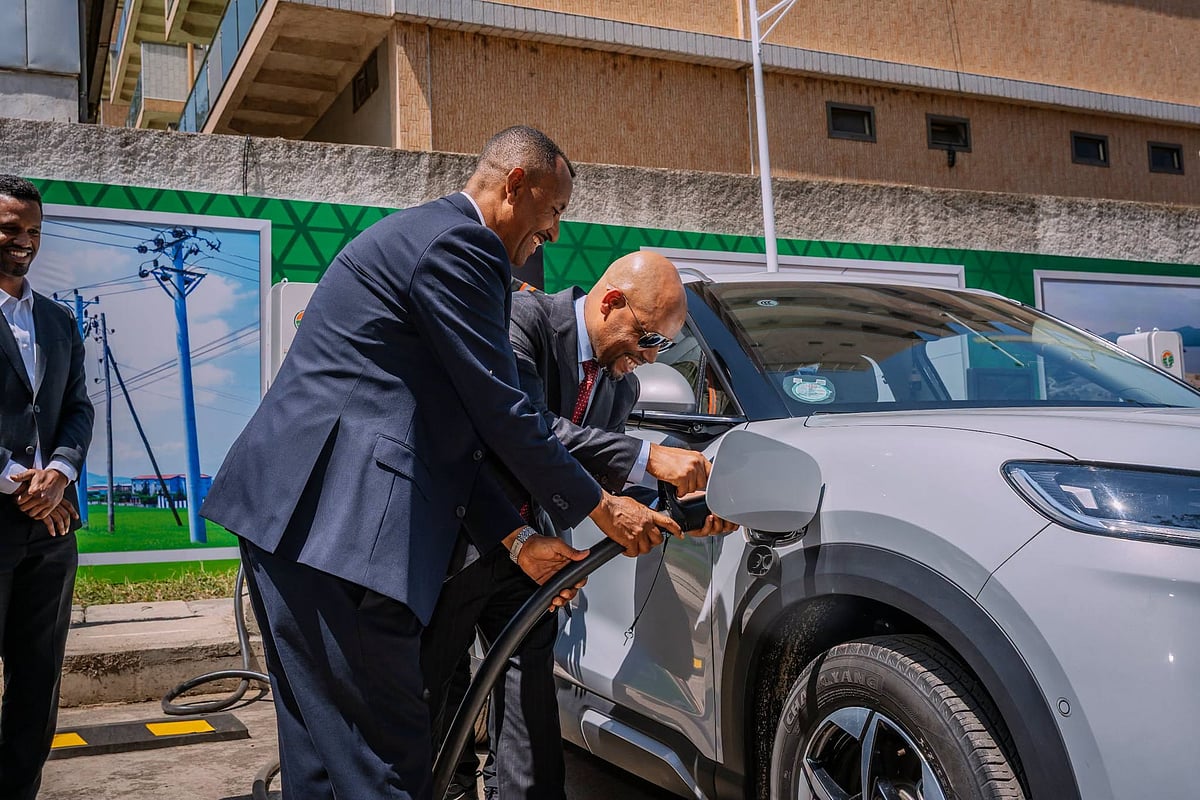
On October 31, the state-owned utility rolled out 11 fast-charging points: Five in the capital, while the remaining six extend coverage along key routes linking Addis Ababa with industrial and regional centres.
The facilities are equipped with fast and standard chargers and can serve up to 96 vehicles simultaneously.
They use a digital payment system, according to the EEU.
The launch raised Ethiopia’s EEU-operated charging network from three to 14 stations, with a combined capacity to charge about 150 vehicles at once.
Eight of the 14 stations are in Addis Ababa.
One of the new Addis Ababa facilities, along Hachalu Road, was built with the city administration and can charge nearly 12 vehicles at a time.
Another station near the new international convention centre is located in a high-traffic area.
But high vehicle prices, a weak electricity grid, limited chargers and renewed regional conflict could determine whether the gamble succeeds.
Ethiopia acts