

A 36-year-old Polish man had a tattoo done with red pigment in the summer of 2020 – and his health quickly took a turn for the worse.He experienced numerous complications, including erythroderma, alopecia, anhidrosis and acquired depigmentation (vitiligo), according to researchers from the Wroclaw Medical University.Only after cutting out the skin with the red tattoo pigment did the autoimmune diseases begin to regress."No cases of such an extensive nature, involving multiple organ systems, have been recorded so far," the researchers said.They emphasised that adverse reactions to pigments used in tattoos are being recognised more and more often, but serious, systemic complications remain rare and poorly understood.Red tattoo ink is often the cause of hypersensitivity reactions that do not appear immediately after the tattoo is done.Erythroderma, hair loss, vitiligo and complete lack of sweatingAfter the tattoo with red ink was done, the man developed a rare and previously undescribed group of complications.The 36-year-old had the tattoo done on his forearm in the summer of 2020. Four months later he developed itchy lesions. Over the following months these turned into erythroderma, a peeling inflammation of the skin. In the years after getting the tattoo he also lost the ability to sweat, lost all body hair and developed vitiligo.After months of ineffective treatment, patch tests were carried out, confirming hypersensitivity to components of…
Polish man loses hair and ability to sweat after red ink tattoo, undergoes 8 surgeries
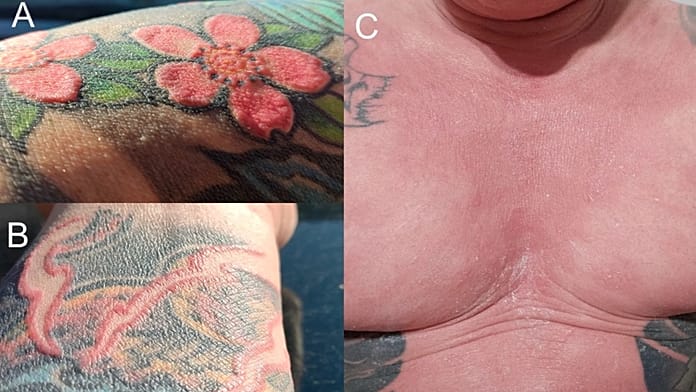
A 36-year-old man in Poland experienced rare, debilitating complications after a tattoo done with red ink.
In brief
A 36-year-old Polish man had a tattoo done with red pigment in the summer of 2020 – and his health quickly took a turn for the worse.He experienced numerous complications, including erythroderma, alopecia, anhidrosis and acquired depigmentation (vitiligo), according to researchers from the Wroclaw Medical University.Only after cutting out the skin with the red tattoo pigment did the autoimmune diseases begin to regress."No cases of such an extensive nature, involving multiple organ systems, have been recorded so far," the researchers said.They emphasised that adverse reactions to pigments used in tattoos are being recognised more and more often, but serious, systemic complications remain…
This is the opening of the story, shared with credit to Euronews. The rest of the report — with every detail — continues on the publisher’s website.
Continue reading at Euronews ↗