

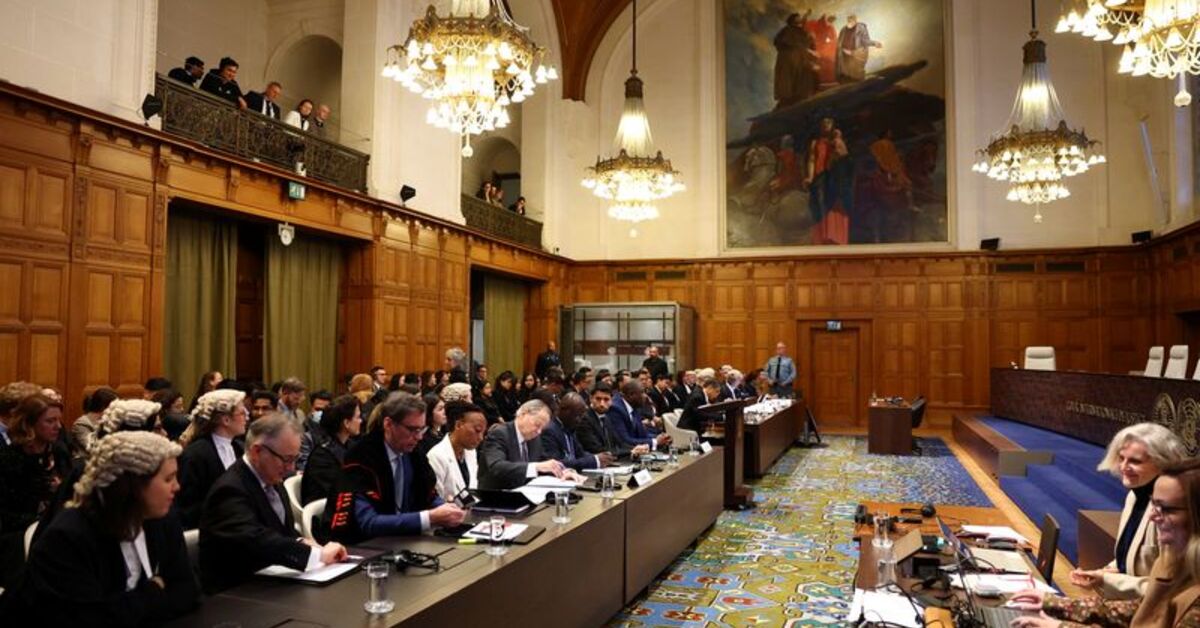
THE HAGUE, Nov 17 (Reuters) - The United Nations' top court, the International Court of Justice, will rule on Thursday in a case in which Gambia accuses Myanmar of committing genocide against its Rohingya Muslim minority in 2017.
Genocide is notoriously difficult to prove. Here are some key points ahead of the ruling.
Genocide has a strict legal definition and has rarely been proven in court since it was cemented in humanitarian law after the Nazi Holocaust. The 1948 Genocide Convention defines genocide as crimes committed "with intent to destroy, in whole or in part, a national, ethnical, racial or religious group, as such".
Five criminal acts can constitute genocide: killing members of the group, causing them serious bodily or mental harm, creating conditions calculated to destroy them, preventing births, or forcibly transferring children to other groups.
International courts have established genocide in only a handful of cases since the Holocaust, including the slaughter in Cambodia of minority Cham and Vietnamese under Khmer Rouge rule in the 1970s, during which some 1.7 million people died; the 1994 mass killing of Tutsis in Rwanda; and the 1995 Srebrenica massacre of about 8,000 Muslim men and boys in Bosnia.
To determine that a state or individuals committed genocide, a court must find that at least one out of the five underlying criminal…