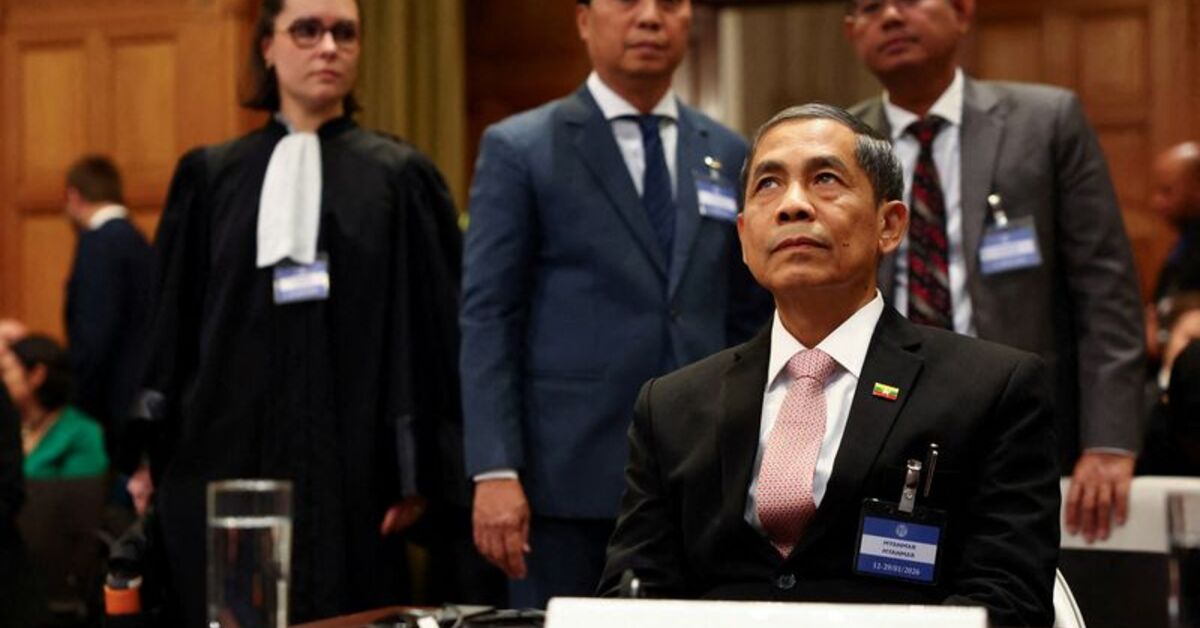
THE HAGUE/COX'S BAZAR, Bangladesh, Nov 17 (Reuters) - The United Nations' highest court is set to rule on Thursday on whether Myanmar's 2017 military campaign against the minority Rohingya amounted to genocide, in a closely watched case that could shape how courts assess state responsibility for the gravest crime under international law.
The decision by the International Court of Justice (ICJ), also known as the World Court, will be its first substantive ruling in more than a decade on alleged violations of the 1948 Genocide Convention.
For the Rohingya, the judgment represents a rare moment of hope that the world will formally recognise their suffering and take a step toward accountability.
"The military took my husband and other men from the village. We saw it happen with our own eyes,"said Hasina Khatun, 34, who lost her husband and brother in the Inn Din massacre, one of several mass killings in Myanmar's northern Rakhine State.
"My husband was gone, my children were crying from hunger, and I was pregnant," she said. "There was no one to help me. Somehow we survived and reached Bangladesh," where they now live in a nine-by-12-foot (three-by-four metre) shelter made of bamboo and plastic sheeting.
Khatun is raising her sons, aged 14, 12 and nine, among about 1.2 million Rohingya refugees in Cox's Bazar, the world's…