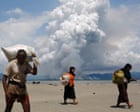
A ruling against Myanmar could set precedent for court’s judgment on Israel’s actions in Gaza
Fears are growing that the US could impose sanctions on judges at the international court of justice, including this year’s Nobel peace prize winner, Navi Pillay, if the court rules on Thursday that the Myanmar government committed genocide against the Rohingya.
The ICJ has never found a state responsible for committing genocide, and a significant factor in previous cases has been how to prove “intent” in a crime defined as acts committed with the “intent to destroy, in whole or in part” a national, ethnical, racial or religious group.
Lawyers representing Rohingya survivors say patterns of behaviour by Myanmar’s military, including killing people as they fled, show clear attempts to destroy the group during assaults on Rakhine state in 2016 and 2017.
It is the role of independent judges to interpret the genocide convention. However, judges at the court have taken advice on how to protect their assets from potential US sanctions, as a genocide ruling could be interpreted by Washington as lowering the “legal threshold” for the crime.
The Foundation for Defense of Democracies, an influential thinktank close to the White House, has predicted a genocide ruling will lead to the US imposing sanctions on the ICJ.