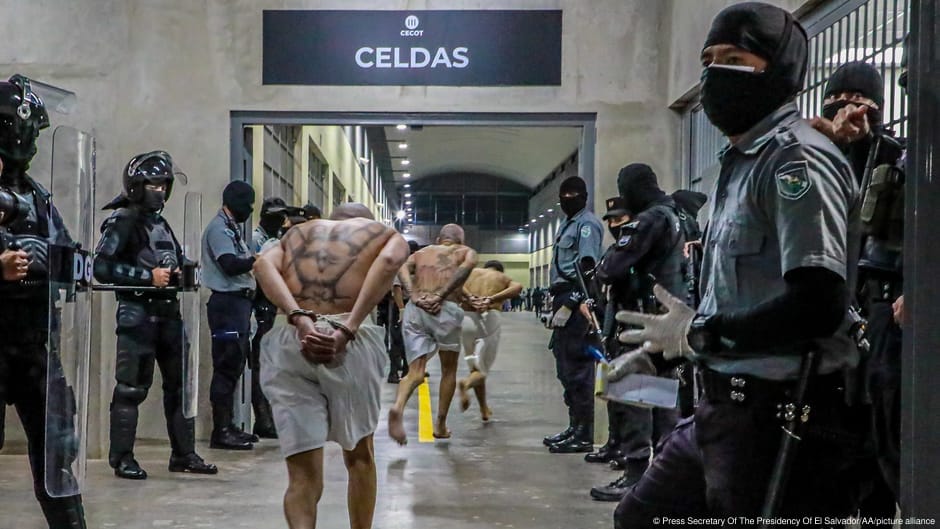
Around 15,000 inmates and a capacity of up to 40,000, prison sentences of up to 1,000 years, strict security measures and an extreme isolation regime. Staged images show inmates with shaved heads and tattoos being subdued by heavily armed guards.
These are just some of the facts circulating about El Salvador's Terrorism Confinement Center (CECOT), a symbol of President Nayib Bukele's security policy and a possible model for other Latin American countries seeking to combat organized crime.
More than a dozen governments in the region have proposed building similar "mega-prisons," although most would have a far smaller capacity. A range of experts consulted by DW question the effectiveness and sustainability of these initiatives.
De facto mega-prisons — that is, overcrowded prisons with excessive inmate populations — existed in Latin America long before Bukele, says criminologist Jose Luis Perez Guadalupe, former president of the National Penitentiary Institute and former interior minister in Peru. Lurigancho Prison in Lima, for example, designed to hold 3,000 inmates, has housed nearly 11,000 for decades.
But ever since CECOT was launched in 2023, the concept of a "mega-prison" has been primarily linked to maximum-security facilities.