

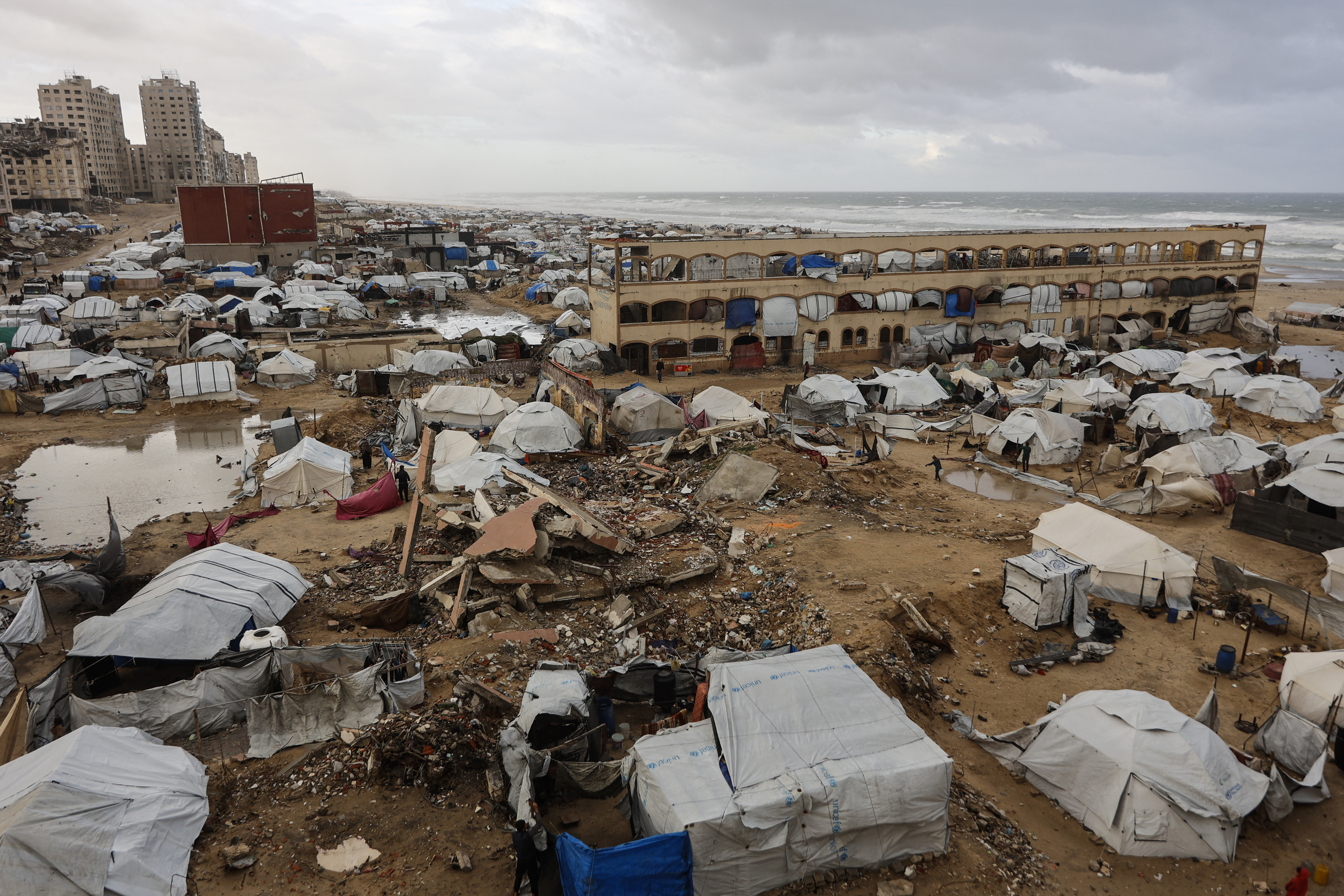
The arrival of winter in Gaza has exposed a humanitarian reality that the ceasefire has failed to change: hundreds of thousands of displaced Palestinians remain trapped in conditions that threaten their lives, with hunger, disease, contaminated water and inadequate shelter compounding the consequences of more than three years of devastating conflict.
Yet this worsening emergency cannot be attributed to the weather, logistical difficulties or funding shortages alone. Israel’s restrictions on humanitarian access, its suspension of vital supply routes and its continued military attacks on populated areas are central to understanding why Gaza’s population remains so vulnerable.
Winter rainfall has turned an already desperate situation into an immediate threat. According to the UN Office for the Coordination of Humanitarian Affairs, heavy rainfall between Nov. 6-9 affected about 46,000 households, or 226,000 people, while damaging more than 40,000 family shelters. Floodwater has inundated tents and makeshift accommodation, leaving families without adequate bedding, clothing or protection from the cold. The destruction of sanitation facilities and damage to health infrastructure have further increased the risks facing displaced communities.
These conditions are not simply the result of a seasonal storm. They reflect the cumulative consequences of the destruction of civilian infrastructure, repeated displacement and the failure to provide adequate materials for shelter, drainage, water and sanitation.