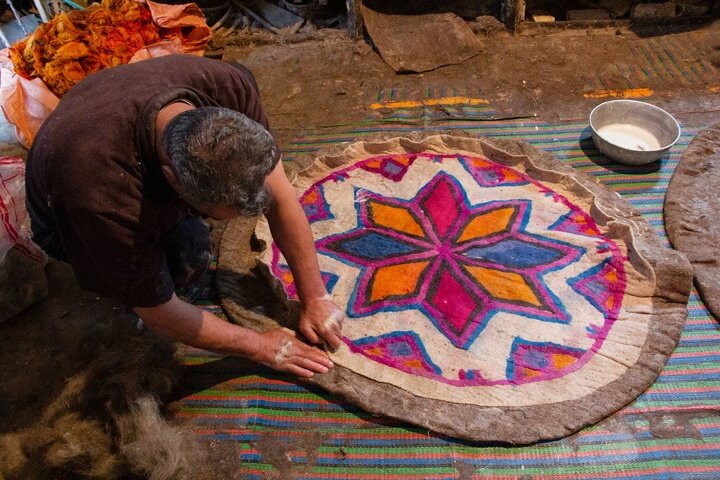
TEHRAN – Iran’s traditional felt-making craft, known as namad-mali, faces an uncertain future as declining consumer demand, changing lifestyles and the gradual loss of traditional skills threaten its continuity. Although the centuries-old practice has considerable potential for producing a wide range of contemporary goods, artisans say its survival depends on developing sustainable markets, supporting workshops and passing on their knowledge to younger generations.
The craft, which involves transforming natural wool into a dense fabric through the application of water, soap and repeated rubbing and pressure, is among the oldest forms of textile production. Unlike woven fabrics, felt is made by interlocking wool fibers without the use of weaving or knitting. The process relies on the natural properties of wool and the skill and experience of the craftsperson.
For generations, felt was used to make practical household items and clothing, particularly in communities where sheep farming provided an accessible source of raw material. Its insulating properties and durability made it suitable for different climates and everyday needs.
Today, however, the craft is struggling to maintain its place in daily life, even as growing interest in traditional knowledge and handmade products offers opportunities for its revival.
Esmaeil Nikookar, an experienced felt-making specialist based in Gilan province, northern Iran, believes that international recognition could help bring renewed attention to the craft, but says…