📰 Newspapers

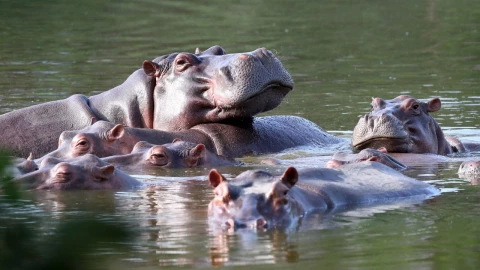
Lake Naivasha hippos killed by fishing nets and maize stalks - KWS

Lake Naivasha hippos killed by fishing nets and maize stalks - KWS

This comes after at least six hippos reportedly died in and around the lake in recent weeks, prompting an investigation by the Service.

The Kenya Wildlife Service (KWS) has clarified the alarming death rates among hippos around Lake Naivasha in Nakuru County.

This comes after at least six hippos reportedly died in and around the lake in recent weeks, prompting an investigation by the Service.

KWS said in a statement that postmortem results and veterinary investigations revealed that two of the wildlife animals consumed materials that proved harmful to their lives.

A postmortem examination of a sub-adult female hippopotamus revealed that it suffered physical blockage at the junction between the stomach and small intestine after consuming a discarded synthetic fishing net.

"The tentative cause of death was cardiopulmonary failure, hypovolemic shock and endotoxemia secondary to complete foreign body obstruction at the gastroduodenal junction," KWS said.

The second animal, an adult female hippopotamus, was found with maize stalks among the stomach contents that may have contributed to dietary overload and excessive fermentation, resulting in gas accumulation and bloating.

Veterinarians identified acute gastrointestinal bloat as the likely mechanism leading to respiratory distress and eventual cardiopulmonary failure.

They observed the contents caused a massive gas distension of its multi-chambered stomach, which displaced the diaphragm forward into the chest cavity and severely compressed the…

In brief

This comes after at least six hippos reportedly died in and around the lake in recent weeks, prompting an investigation by the Service. The Kenya Wildlife Service (KWS) has clarified the alarming death rates among hippos around Lake Naivasha in Nakuru County. The second animal, an adult female hippopotamus, was found with maize stalks among the stomach contents that may have contributed to dietary overload and excessive fermentation, resulting in gas accumulation and bloating.

This is the opening of the story, shared with credit to Citizen Digital. The rest of the report — with every detail — continues on the publisher’s website.

Continue reading at Citizen Digital ↗

Cookie settings

Choose which cookies we may use. You can change this at any time from Cookie settings in the footer. Details of each cookie are in the Cookie Policy.

Strictly necessary

Needed for sign-in, security, payments and remembering these choices. Always on.

Preferences

Remember settings such as dark mode.

Analytics & performance

Help us count visits, understand which pages, devices and countries our readers use, and measure how well the site performs – anonymous and aggregated.

Advertising & marketing

Lets advertising partners show and personalise adverts, measure impressions, clicks and visits, prevent ad fraud and pay us – this is how the free site is funded.

🔔 News notifications

Get headlines from NewsHub on this device — even when the site is closed.

You can switch this off at any time. Works on Android, Windows, Mac and Linux browsers; on iPhone/iPad add the site to your Home Screen first.