

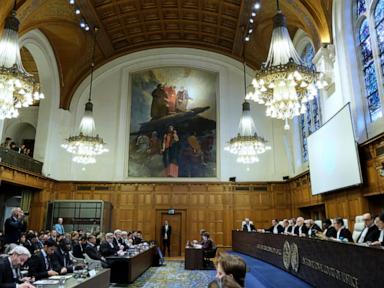
The United Nations’ top court has for the first time ruled that a nation committed what legal scholars call the crime of crimes, finding that Myanmar committed genocide in a brutal 2017 military crackdown against the Rohingya minority
THE HAGUE, Netherlands -- The United Nations' top court has for the first time ruled that a nation committed what legal scholars call the crime of crimes, finding that Myanmar committed genocide in a brutal 2017 military crackdown against the Rohingya minority.
The International Court of Justice has been asked to reach that conclusion before, but never found enough evidence to make the determination of a state-sponsored genocide like the one targeting the Rohingya.
The World Court has more cases on its docket dealing with alleged breaches of the 1948 Genocide Convention, including a politically charged case about Israel’s actions in Gaza.
What happened: The Srebrenica massacre was a peak in the violence of Bosnia’s 1992-95 war, which came after the breakup of Yugoslavia unleashed nationalist passions and territorial ambitions across the region.
On July 11, 1995, Serbs overran Srebrenica, at the time a U.N.-protected safe area. They separated at least 8,000 Bosniak men and boys from their wives, mothers and sisters and slaughtered them. Those who tried to escape were chased through the woods and over the mountains around town.