

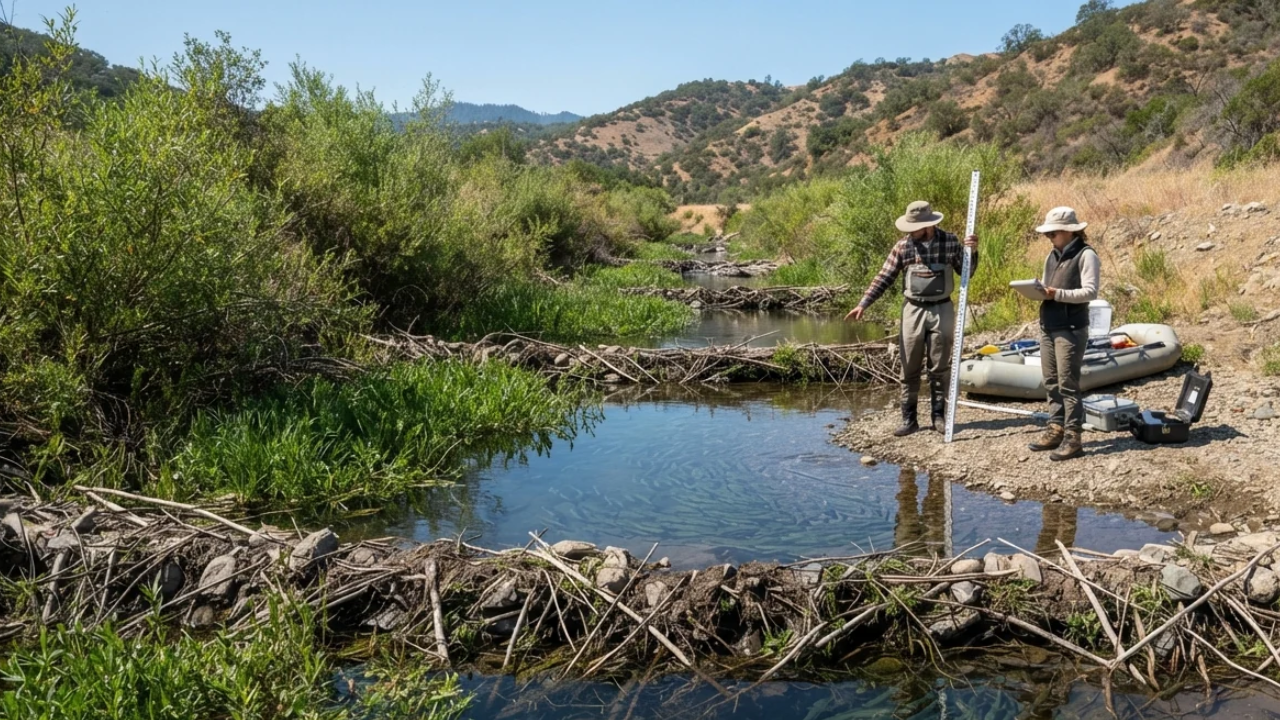
Summer drought had left parts of California's Scott River watershed struggling to sustain the streams that young coho salmon depend on. In some stretches, water levels fell so low that creeks could no longer provide reliable habitat through the warmer months. A restoration project launched took an unusual approach to the problem. Instead of rebuilding the waterways with expensive engineering work, conservation teams placed wooden posts and willow branches across selected streams, creating structures that mimicked natural beaver dams. The results became apparent over the following years, with more young salmon surviving, vegetation spreading along the banks and adult fish returning in far greater numbers.How artificial beaver dams changed the streamsThe work began in Sugar Creek, a tributary of the Scott River in Northern California's Klamath Basin. Its condition reflected decades of changes to the surrounding landscape. Early gold mining, logging and water diversions had altered the creek, leaving parts of it prone to drying out during summer. Coho salmon had historically used the waterway, but the deteriorating conditions made it increasingly difficult for the fish to survive.When NOAA Fisheries scientists joined the Scott River Watershed Council to test a relatively inexpensive restoration method. They installed structures known as beaver dam analogues, or BDAs, using wooden posts and interwoven willow branches.
California’s artificial beaver dams help 7,000 young salmon survive drought
In brief
Summer drought had left parts of California's Scott River watershed struggling to sustain the streams that young coho salmon depend on. Instead of rebuilding the waterways with expensive engineering work, conservation teams placed wooden posts and willow branches across selected streams, creating structures that mimicked natural beaver dams. They installed structures known as beaver dam analogues, or BDAs, using wooden posts and interwoven willow branches.
This is the opening of the story, shared with credit to The Times of India — World. The rest of the report — with every detail — continues on the publisher’s website.
Continue reading at The Times of India — World ↗