The National Grid Corporation of the Philippines (NGCP) again drew a strong pushback from its recent controversial program. This time, from industry peers, particularly the Philippine Independent Power Producers Association (PIPPA) and Philippine Solar and Storage Energy Alliance (PSSEA) in connection with its recently unveiled transmission-side energy storage project initiative called Project Airbag.
Project Airbag is yet one of those ambitious programs of NGCP that is seen off tangent from its structural role, with its planned P700-billion, five-year plan to deploy 10,000 megawatts (MW) of battery energy storage systems (BESS) purportedly to store excess electricity and release it during sudden shortages, peak demand, and grid disturbances.
Play Video
NGCP describes the project as a fast-response buffer or “shock absorber” (as it technically calls it) and a forward-thinking concept to stabilize the Philippine power grid, capitalizing on the generation constraints anticipated for the El Niño dry season phenomenon in 2027.
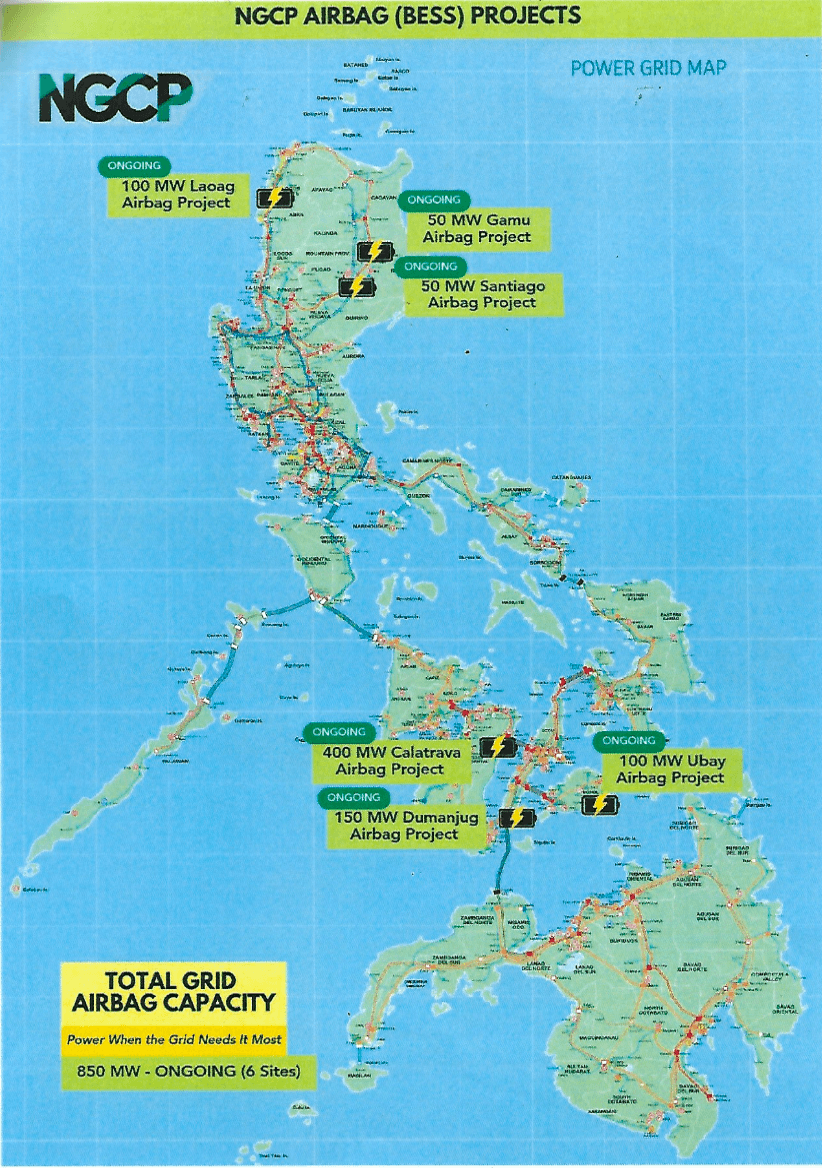
As reported last November 9, NGCP will start Project Airbag shortly with a P59.5-billion, 850 MW Phase 1 rollout.
Crux of the issue
Project Airbag is now under review by the Energy Regulatory Commission (ERC).