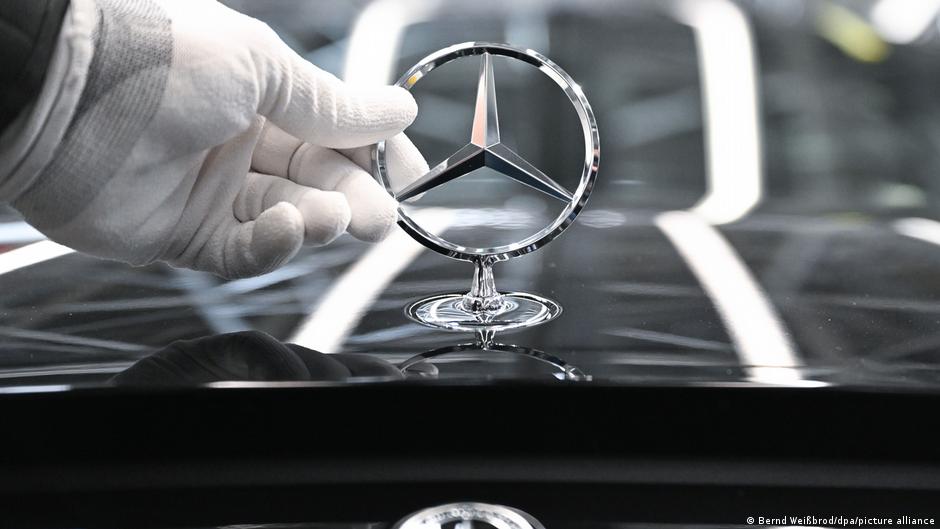
Mercedes-Benz's announcement last week that it would halt further investments at its factories in Germany has added to the sense that the country's best automaking days are behind it.
In a written interview for staff, production chief Michael Schiebe noted how the running costs of German plants are far too high.
Schiebe added that the automaker is "now forced to carefully examine which German sites we would have to close if we cannot achieve a change in the cost structure."
The decision came one day after Volkswagen (VW), Europe's largest carmaker, said it was shelving plans to modernize its massive Wolfsburg plant.
To view this video please enable JavaScript, and consider upgrading to a web browser that supports HTML5 video
Germany's auto sector is in a deep crisis, amid fierce rivalry from ambitious Chinese automakers. VW alone is looking to cut 100,000 jobs globally by 2030, while four of its German factories are earmarked for possible closure.
Yet, many auto analysts doubt this really marks the beginning of the end for car making in the country.
"We have to admit that a third of our capacity [in German plants] is overcapacity and that needs to be cut." Thomas Puls, senior economist for transport and infrastructure at the Cologne Institute for Economic Research (IW Köln), told DW.