

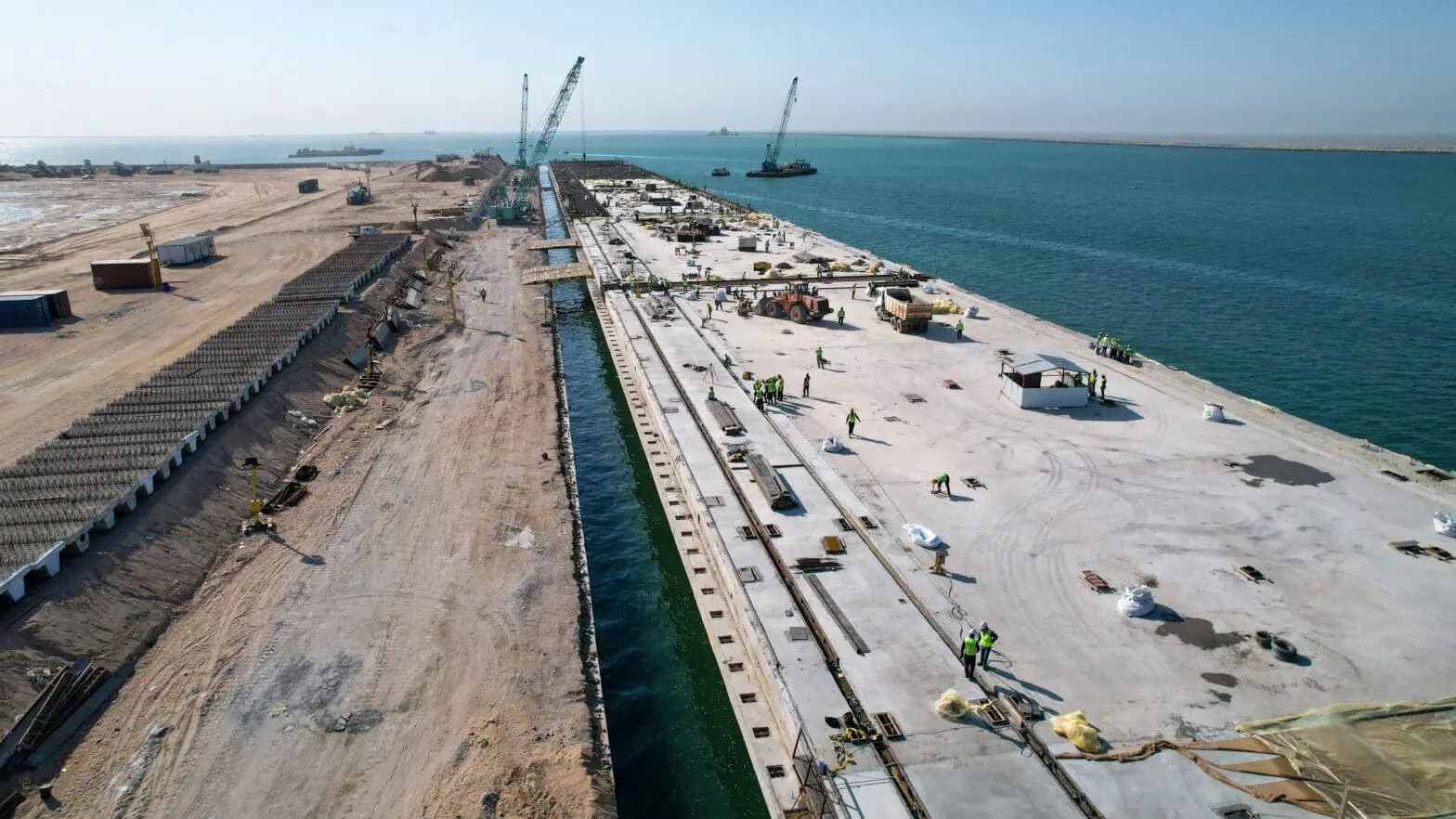
Writing in 1919, British geographer Halford Mackinder, considered by many to be one of the architects of modern geopolitics, described the strategic importance of what he called the “world island” — the connected landmass of Asia, Europe and Africa. Sitting at the hinge of this so-called world island is the Middle East, making it one of the most strategic regions in the world. Yet, for too long, the region’s potential for global and regional transport has not been fully realized.
Moving beyond traditional discussions about which shipping lanes are open or closed, there are four recent initiatives worth examining: Iraq’s Development Road, the India-Middle East-Europe Economic Corridor, the Gulf Cooperation Council railway project and the proposed north-south railway corridor connecting Turkiye and Saudi Arabia through Syria and Jordan. If realized, these projects could make the Middle East one of the most important regions in the world for global transport and trade.
In fact, all four initiatives have seen important developments in recent weeks. In late October, Iraq announced further progress on the engineering designs for its Development Road project. On Nov. 5, the Organisation for Economic Co-operation and Development published a major report examining the potential of the India-Middle East-Europe Economic Corridor. On Nov.