

When it comes to decarbonisation, some industries, such as maritime shipping and plastic production, are faced with serious problems. e-methanol could solve some of them. Biogas from slurry, sustainable electricity from solar panels, water from a well; these are the ingredients needed to synthesise e-methanol. These are all processed within an impressive industrial jungle, made from intermingled steel tubes, imposing distillation towers and curiously flat storage tanks.The first of its kindWhile adjusting my hard hat, a huge truck enters the site. “Every day we receive 5 trailers with biogenic CO2”, Lars Dyrholm explains. Lars is not just one of those hardy Danish “Ironmen”, capable of running for many kilometres without losing breath. He is also the CEO of the Kassø site, supervising the upscaling of production in this first of its kind industrial plant. Mia Amalie Jochimsem, an on-site employee, joins us. “We have so much agriculture around here”, she says, adding: “We capture the CO₂ from the biogas plants.” Dyrholm and Jochimsem take me on a tour of discovery through the innovative jungle of steel and pipes.A European flagship projectBut let’s start from the very beginning: “In here we have the electrolysers”, Jochimsem explains. “This is where water is separated into hydrogen and oxygen.” Once biogenic CO₂ is added, e-methanol is created. The plant is a European flagship project.…
Will e-methanol become a game changer for decarbonising maritime shipping and plastic industries?
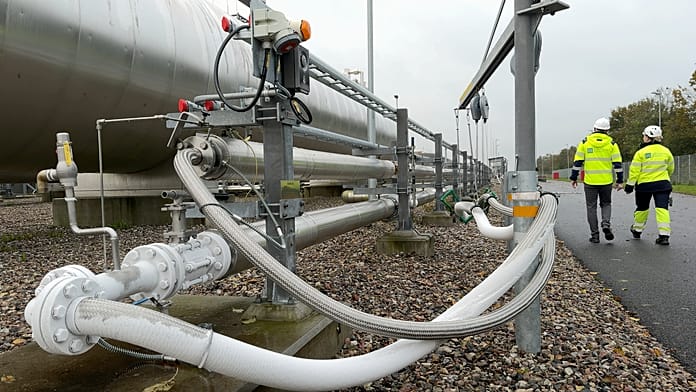
Euronews gained access to the world’s first industrial plant that produces e-methanol on a large scale. The Kassø site in Denmark paves the way for a climate-friendly energy transition — even within hard to abate sectors.
In brief
When it comes to decarbonisation, some industries, such as maritime shipping and plastic production, are faced with serious problems. e-methanol could solve some of them. “Every day we receive 5 trailers with biogenic CO2”, Lars Dyrholm explains. Mia Amalie Jochimsem, an on-site employee, joins us. Once biogenic CO₂ is added, e-methanol is created.
This is the opening of the story, shared with credit to Euronews. The rest of the report — with every detail — continues on the publisher’s website.
Continue reading at Euronews ↗