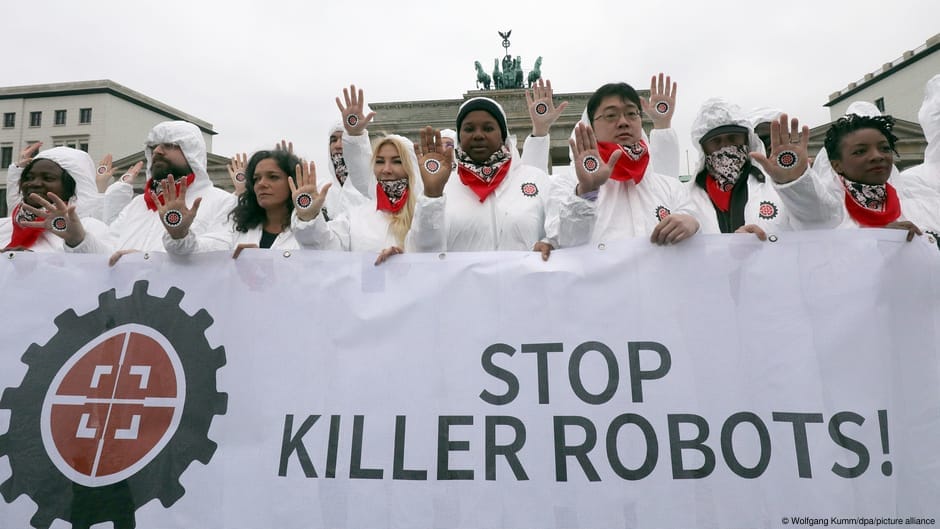
United Nations talks on regulating lethal autonomous weapons systems ended on Saturday without an agreement on a legally binding ban.
The negotiations did, however, yield an agreement for further discussions to develop new rules by 2028.
Delegates from 128 states that are parties to the UN Convention on Certain Conventional Weapons (CCW) had been meeting in Geneva since Monday amid rising concerns over the use of the so-called killer robots in global conflicts.
The conference ended early on Saturday in what campaigners deemed a "weakened" outcome, following several hours of overnight parleying.
Nearly 100 nations had called for negotiations on a legally binding agreement on the systems capable of killing without a human making the final decision to fire.
UN Secretary-General António Guterres, Pope Leo XIV and the Red Cross had also supported a ban on killer robots.
However, countries that have the technology, including arms-producing giants like the US, Russia and Israel, were among those opposing the mandate.
Ultimately, the 128 countries "agreed to launch the elaboration of an international instrument on lethal autonomous weapons systems, which should be conducted over the next two years", the conference's Swiss chair, Julien Thoni, told the media on Saturday.
But while Thoni hailed a multilateral diplomacy delivering "concrete results" even in "today's deeply divided world,"