

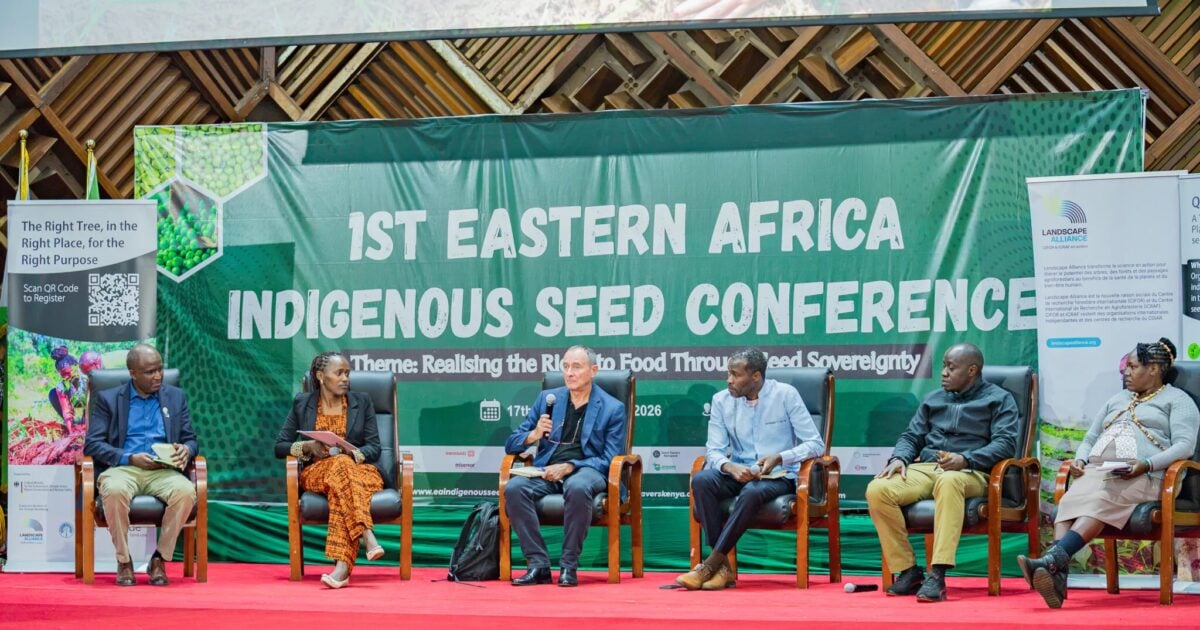
NAIROBI, Kenya, Nov 21 – The success of landscape restoration efforts in Eastern Africa will increasingly depend on the quality and origin of tree seeds, as climate change alters rainfall patterns and threatens the survival of newly planted trees.
Experts have warned that planting trees without considering their suitability to future climatic conditions risks undermining restoration investments, calling for greater investment in quality indigenous seeds and stronger community participation in tree seed production.
The issue featured prominently at the first Eastern Africa Indigenous Seed Conference, held from November 17–20 at the Catholic University of Eastern Africa in Nairobi, which brought together farmers, researchers, policymakers, seed custodians and development partners to strengthen farmer-managed seed systems across the region.
Sammy Carsan, Agroforestry Specialist at Landscape Alliance, said selecting appropriate seed sources was critical to ensuring trees planted today could survive changing environmental conditions in the years ahead.
“The tree you plant today has to survive the climate of future years. And that depends on the seed you choose today,” he said.
Carsan said restoration practitioners needed to consider tree species characteristics, local environmental conditions and projected climate changes when selecting seeds, warning that unsuitable choices could leave restored landscapes vulnerable as temperatures rise and rainfall becomes increasingly unpredictable.