

The architectural complex around and beneath Hagia Sophia never ceases to amaze.Six underground spaces, nine tunnels and almost 3,000 tonnes of soil are revealing unknown facets of the monument's history.An underground world, unknown until now, is gradually being uncovered beneath Hagia Sophia. Galleries, ancient water networks and architectural remains, which may date back to a period earlier than the construction of the present-day basilica in the 6th century, are coming to light during restoration work on the historic monument. So far, 420 metres of underground tunnels have been cleaned, while the Turkish authorities are considering opening some of them to visitors, offering a new perspective on the history of Byzantine Constantinople.The scale and importance of the work was presented by the Turkish Minister of Culture and Tourism, Mehmet Nuri Ersoy, who went down into Hagia Sophia's underground installations, accompanied by scientists involved in the restoration programme. The Turkish television network CNN Türk has for the first time shown images of the underground galleries and the work taking place in areas that for centuries remained covered by earth and other materials.According to the data released by the Turkish minister, almost 3,000 tonnes of backfill materials have been removed from two areas of the monument, the Vizier's Garden and the western garden, while investigations have identified six underground spaces and nine tunnels.…
Hagia Sophia's hidden tunnels uncovered as 420 metres of underground network cleaned
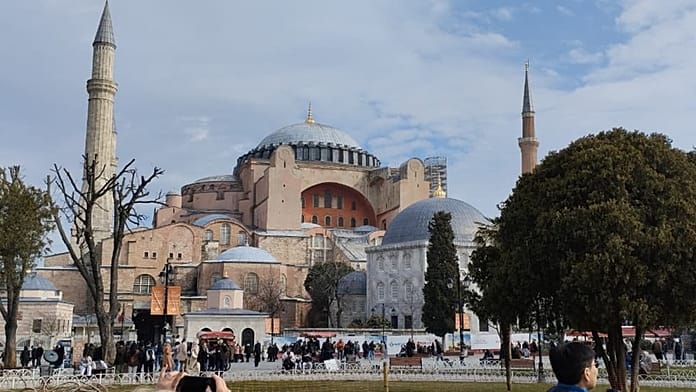
During cleaning and excavation works carried out at the site, significant remains were uncovered and carefully documented by archaeologists.
In brief
The architectural complex around and beneath Hagia Sophia never ceases to amaze.Six underground spaces, nine tunnels and almost 3,000 tonnes of soil are revealing unknown facets of the monument's history.An underground world, unknown until now, is gradually being uncovered beneath Hagia Sophia. Galleries, ancient water networks and architectural remains, which may date back to a period earlier than the construction of the present-day basilica in the 6th century, are coming to light during restoration work on the historic monument.
This is the opening of the story, shared with credit to Euronews. The rest of the report — with every detail — continues on the publisher’s website.
Continue reading at Euronews ↗