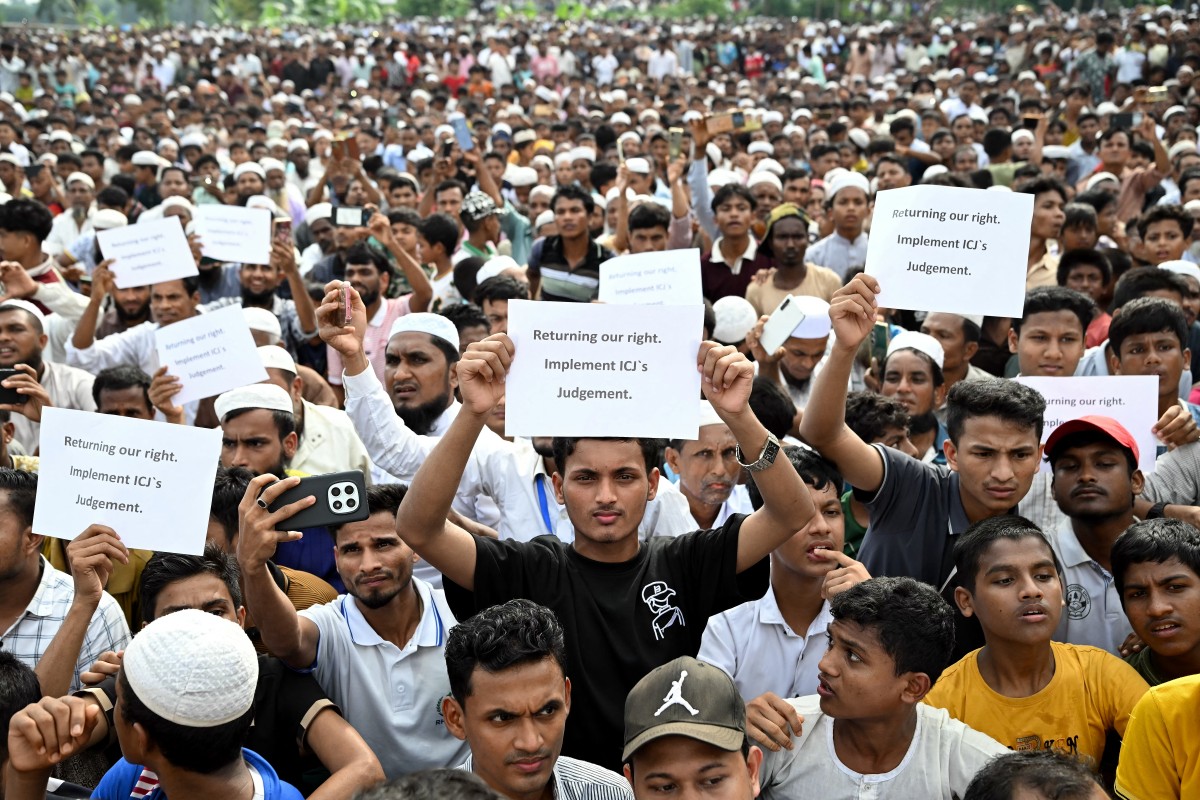
DHAKA: Mujibur Rahaman remembers the harrowing journey he undertook with his family nearly 10 years ago after the Myanmar military burned down villages and killed his neighbors, forcing survivors to flee to neighboring Bangladesh.
It took them several days to cross the border from their home in Myanmar’s northern Rakhine State, navigating difficult terrain without proper food, drinking water or rest and carrying only a handful of essentials as they tried to save themselves.
“The journey was extremely difficult and frightening. We traveled mostly on foot, walking through villages, fields, hills and difficult routes to escape the violence,” the 26-year-old told Arab News on Saturday.
“My last memories of Rakhine are painful and unforgettable. I remember the fear, violence and suffering of our people during the military crackdown in 2017.”
Rahaman and his family were among more than 700,000 Rohingya forced to flee that year, as Myanmar forces launched a military campaign that killed at least 10,000 people, including up to 2,109 children under five.
On Thursday, the International Court of Justice at The Hague ruled that Myanmar committed genocide against the Rohingya minority in that brutal military operation. The landmark judgment marked the first time the court held a state responsible for the gravest of crimes under international law.