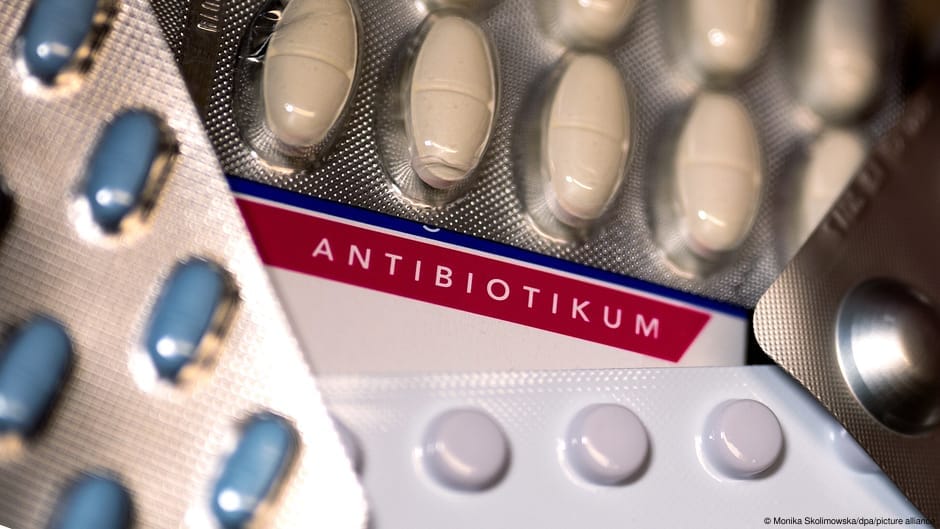
"The threat is immense," said Jean Pierre Nyemazi, acting director of the World Health Organization's department of antimicrobial resistance, during a virtual press conference recently. "An estimated cumulative number of 39 million deaths directly attributable to AMR [antimicrobial resistance] would occur in the next 25 years."
It was, however, the stated goal of World Health Organization, or WHO, member statesto reduce the mortality rate caused by AMR by 10% until 2030, Nyemazi added. "When we see the trend, the investments, the action, we don't think we are on the right track."
A world without effective antibiotics would be like traveling back to the days in which even the smallest infection was life-threatening, said Can Imirzalioglu, director of the Institute of Medical Microbiology at Justus Liebig University Giessen. "If antibiotics were no longer effective, modern medicine as we know it today would no longer be possible at all."
Imirzalioglu is not only an expert on antibiotic resistance but also on "One Health," a concept adopted in 2004 by experts in human medicine, veterinary medicine and nature conservation. It recognizes that the health of humans, animals and the environment is closely interconnected.
After all, antibiotics and antimicrobial-resistant germs are not just a problem in hospitals.