

The job of an archeologist is one that requires immense patience to find something worthy of being called a treasure over the years. The Earth’s geomorphic cycle has buried centuries of evidence of life on this planet, which is why one of the best sources of human history has been digging around the suspected archeological sites. At the Lötschen Pass, archaeologists have been digging through the same stretch of mountain for years, and the ground there keeps giving things back. The discoveries began with Roman coins and medieval-age arrows.The epochs of the planet have buried secrets of our evolution into the layers of mud, rock, water and ice. Therefore, materials are not just buried under rugged rocks and mud, but in all kinds of landscapes such as underwater and under huge snow-covered glaciers. This is best seen at the Lötschen Pass, more than 2,600 metres above sea level, where since 2011, melting ice has revealed artefacts from the Bronze Age, including bow, arrows, pieces of leather and a box made of wood chips.Meanwhile, graves at Gwatt, Einigen and Hilterfingen have yielded neck jewellery from the same era, worn by men and women.
As ice receded on a Swiss Alpine pass, archaeologists discovered a 4,000 years old bronze neck ring
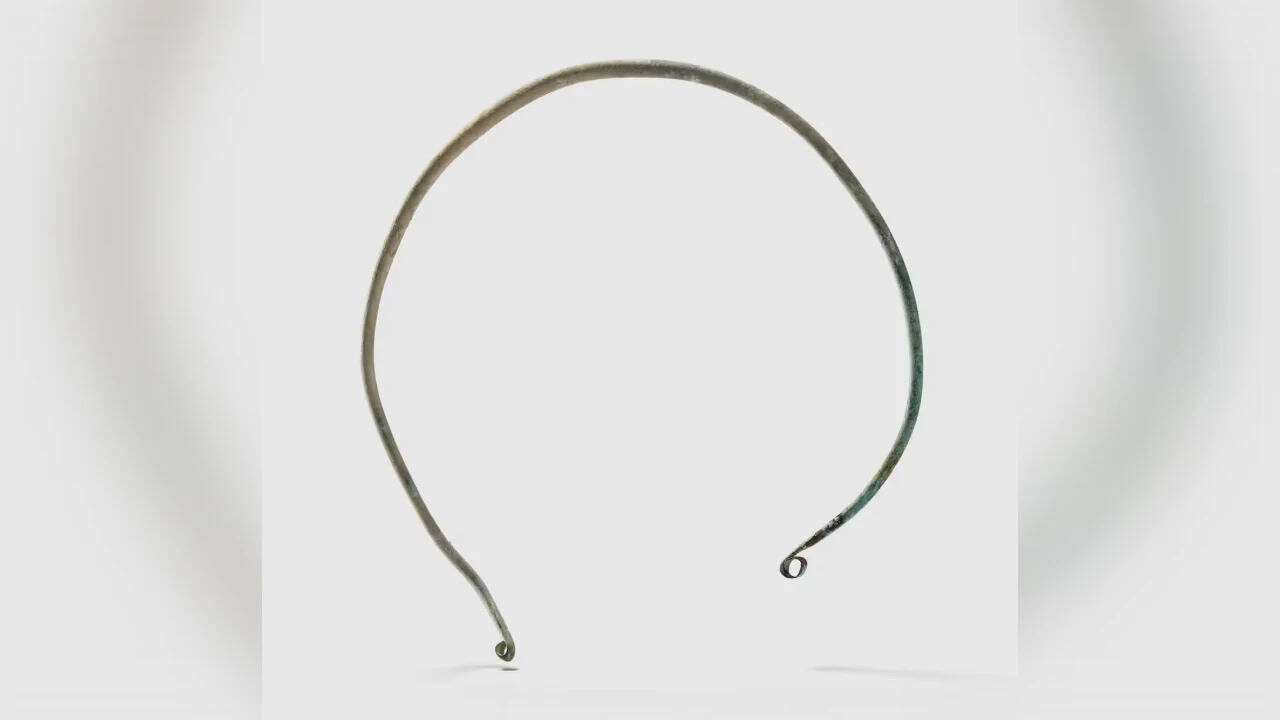
A remarkable discovery at Lötschen Pass has unearthed a 4,000-year-old bronze neck ring, making it the first metal artifact found at this significant historical site. While previous discoveries were primarily organic materials preserved in ice, this find suggests that ancient peoples may have practiced mobility through Alpine passes, connecting various regions. Experts speculate that the ring could have served as a…
In brief
The job of an archeologist is one that requires immense patience to find something worthy of being called a treasure over the years. At the Lötschen Pass, archaeologists have been digging through the same stretch of mountain for years, and the ground there keeps giving things back. Therefore, materials are not just buried under rugged rocks and mud, but in all kinds of landscapes such as underwater and under huge snow-covered glaciers.
This is the opening of the story, shared with credit to The Times of India — World. The rest of the report — with every detail — continues on the publisher’s website.
Continue reading at The Times of India — World ↗