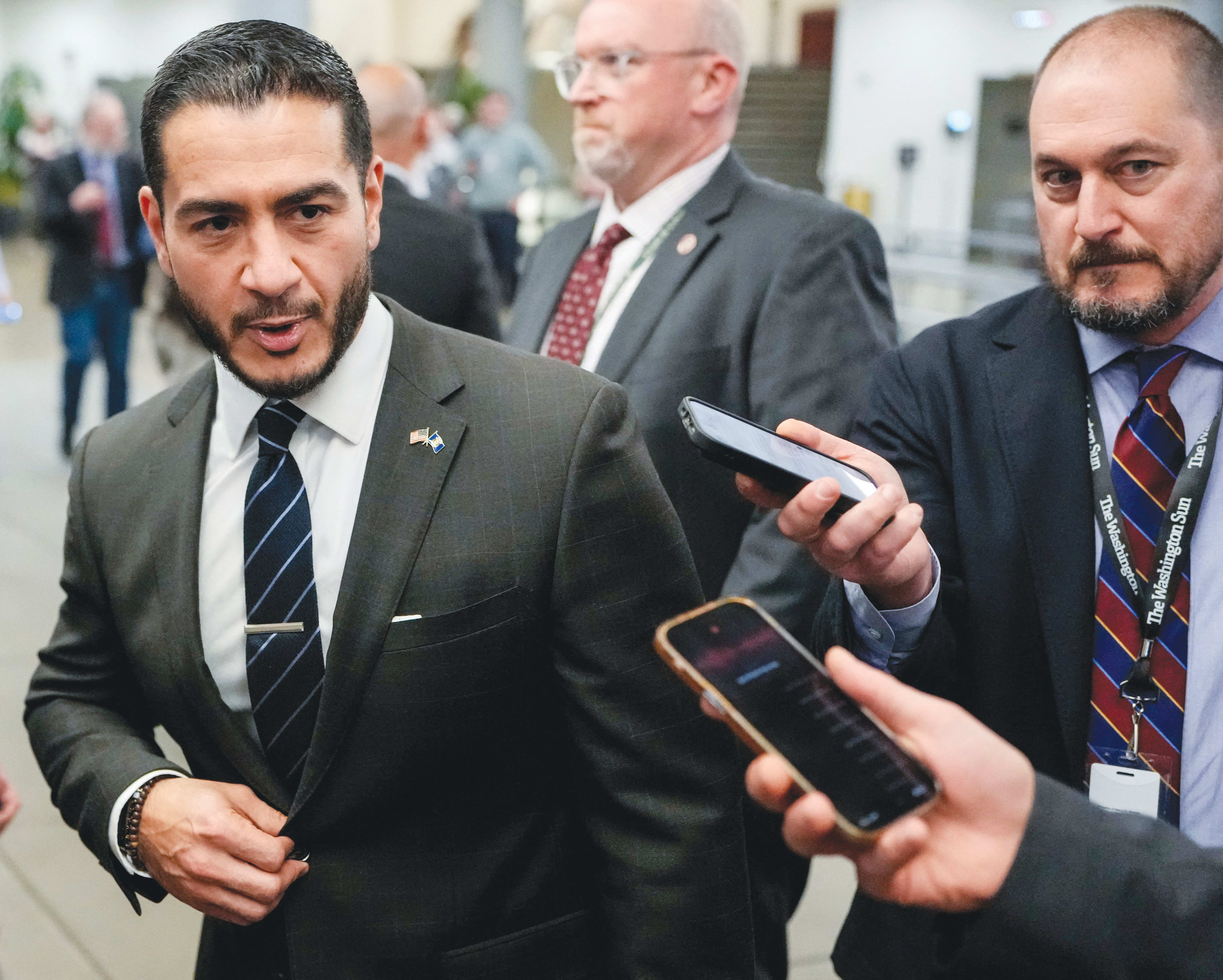
Something deeply disturbing happened in America's November 3 elections. Candidates whose remarks about Jews and Israel sparked outrage nevertheless won seats in Congress, showing that views once considered politically disqualifying no longer necessarily carry an electoral price.In Colorado, Melat Kiros was elected to the House after describing Hamas's October 7 massacre as an “inevitable consequence” of Israeli policies, a characterization she later insisted, apparently with a straight face, was not intended to justify the attack.In New York, Darializa Avila Chevalier won despite having publicly expressed support for Rasmea Odeh, who was convicted for her role in a 1969 Jerusalem bombing that murdered two Israeli students.And in Michigan, Abdul El-Sayed won a Senate seat after saying “hurt people hurt people” in response to an attack on a Detroit-area synagogue, remarks for which he later apologized.How did positions and statements that might once have destroyed a political career become so readily tolerated?Looking to an 18th-century Austrian emperor for precedentA remarkable precedent can be found in the history of Austria-Hungary, whose emperor died 110 years ago this week.On November 21, 1916, Emperor Franz Joseph passed away after nearly 68 years on the throne. For the Jews of his empire, his reign had brought unprecedented freedom and opportunity.Under Franz Joseph's rule, centuries of anti-Jewish discrimination were dismantled, culminating in full emancipation in 1867.
Midterm elections 2026: What happens when antisemitism becomes an electoral asset? - opinion

Once antisemitism ceases to be a political liability, those who exploit it will have every reason to believe they can get away with even more.
In brief
Something deeply disturbing happened in America's November 3 elections. Candidates whose remarks about Jews and Israel sparked outrage nevertheless won seats in Congress, showing that views once considered politically disqualifying no longer necessarily carry an electoral price.In Colorado, Melat Kiros was elected to the House after describing Hamas's October 7 massacre as an “inevitable consequence” of Israeli policies, a characterization she later insisted, apparently with a straight face, was not intended to justify the attack.In New York, Darializa Avila Chevalier won despite having publicly expressed support for Rasmea Odeh, who was convicted for her role in a 1969 Jerusalem bombing…
This is the opening of the story, shared with credit to The Jerusalem Post. The rest of the report — with every detail — continues on the publisher’s website.
Continue reading at The Jerusalem Post ↗