📰 Newspapers

UK-EU food deal hailed by British firms: ‘We’re pretty aligned anyway’

UK-EU food deal hailed by British firms: ‘We’re pretty aligned anyway’

Exporters welcome end in sight for Brexit checks – but are frustrated that implementation will take so long

British producers have broadly welcomed the UK’s deal with the EU, designed to remove the vast majority of physical checks on food, plants and animal products.

The sanitary and phytosanitary (SPS) deal is expected to benefit Britain’s food exporters and will enable UK delicatessens and other small retailers to import European cheese and wine again, something that became economically unviable because of costly Brexit checks.

The agreement is due to take effect on 1 March 2028 and is also intended to reopen the EU market for UK products including fresh sausages, burgers, seed potatoes and molluscs.

However, several years after the UK left the bloc, upending many decades-old trading arrangements, some food exporters said they would remain cautious until the deal came into force.

“Nobody’s going to believe this until it has actually physically happened,” said Iain Barbour, the operations director of the Scottish seed potato producer Jamieson Brothers.

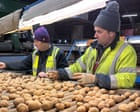
Seed potatoes were not included in the post-Brexit trade deal after the two sides disagreed over certification, halting exports from the UK to the EU despite Scottish seed potatoes’ high health status classification.

The exclusion particularly hit the Scottish industry, whose farmers were among the biggest exporters for the production of chips and…


In brief

Exporters welcome end in sight for Brexit checks – but are frustrated that implementation will take so long British producers have broadly welcomed the UK’s deal with the EU, designed to remove the vast majority of physical checks on food, plants and animal products. Seed potatoes were not included in the post-Brexit trade deal after the two sides disagreed over certification, halting exports from the UK to the EU despite Scottish seed potatoes’ high health status classification.

This is the opening of the story, shared with credit to The Guardian — World. The rest of the report — with every detail — continues on the publisher’s website.

Continue reading at The Guardian — World ↗

Cookie settings

Choose which cookies we may use. You can change this at any time from Cookie settings in the footer. Details of each cookie are in the Cookie Policy.

Strictly necessary

Needed for sign-in, security, payments and remembering these choices. Always on.

Preferences

Remember settings such as dark mode.

Analytics & performance

Help us count visits, understand which pages, devices and countries our readers use, and measure how well the site performs – anonymous and aggregated.

Advertising & marketing

Lets advertising partners show and personalise adverts, measure impressions, clicks and visits, prevent ad fraud and pay us – this is how the free site is funded.

🔔 News notifications

Get headlines from NewsHub on this device — even when the site is closed.

You can switch this off at any time. Works on Android, Windows, Mac and Linux browsers; on iPhone/iPad add the site to your Home Screen first.