📰 Newspapers

Briton swims length of strait of Hormuz to highlight environmental cost of war

Briton swims length of strait of Hormuz to highlight environmental cost of war

UN patron Lewis Pugh saw ships ablaze and fighter jets overhead during three-day swim as Iran conflict continues

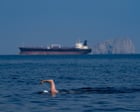
A British endurance swimmer has completed a three-day swim through the strait of Hormuz to highlight the environmental cost of the Iran war.

Lewis Pugh, a UN patron of the oceans, swam the 9.3-mile (15km) length of the waterway, which is a key route for oil shipments from the Middle East.

According to the Lewis Pugh Foundation, he witnessed several attacks on commercial shipping, explosions in the distance and fighter jets overhead.

An oil tanker was struck by a projectile about 2.5 miles from where he was swimming on the first day. On the second, he saw flames rising above a headland separating him from a burning liquefied petroleum gas carrier, Tara Gas, and later he passed close to the vessel while it was still on fire.

“My immediate thoughts were for the seafarers onboard,” Pugh said. “The flames were enormous. These vessels carry highly flammable gases, and an attack on one can have catastrophic consequences, not just for crew members but also on the surrounding marine environment.”

The 56-year-old undertook his first swim in a conflict zone to urge an end to the fighting, the reopening of the strait and action to address environmental damage caused by the conflict.

In brief

UN patron Lewis Pugh saw ships ablaze and fighter jets overhead during three-day swim as Iran conflict continues A British endurance swimmer has completed a three-day swim through the strait of Hormuz to highlight the environmental cost of the Iran war. According to the Lewis Pugh Foundation, he witnessed several attacks on commercial shipping, explosions in the distance and fighter jets overhead.

This is the opening of the story, shared with credit to The Guardian — World. The rest of the report — with every detail — continues on the publisher’s website.

Continue reading at The Guardian — World ↗

Cookie settings

Choose which cookies we may use. You can change this at any time from Cookie settings in the footer. Details of each cookie are in the Cookie Policy.

Strictly necessary

Needed for sign-in, security, payments and remembering these choices. Always on.

Preferences

Remember settings such as dark mode.

Analytics & performance

Help us count visits, understand which pages, devices and countries our readers use, and measure how well the site performs – anonymous and aggregated.

Advertising & marketing

Lets advertising partners show and personalise adverts, measure impressions, clicks and visits, prevent ad fraud and pay us – this is how the free site is funded.

🔔 News notifications

Get headlines from NewsHub on this device — even when the site is closed.

You can switch this off at any time. Works on Android, Windows, Mac and Linux browsers; on iPhone/iPad add the site to your Home Screen first.