

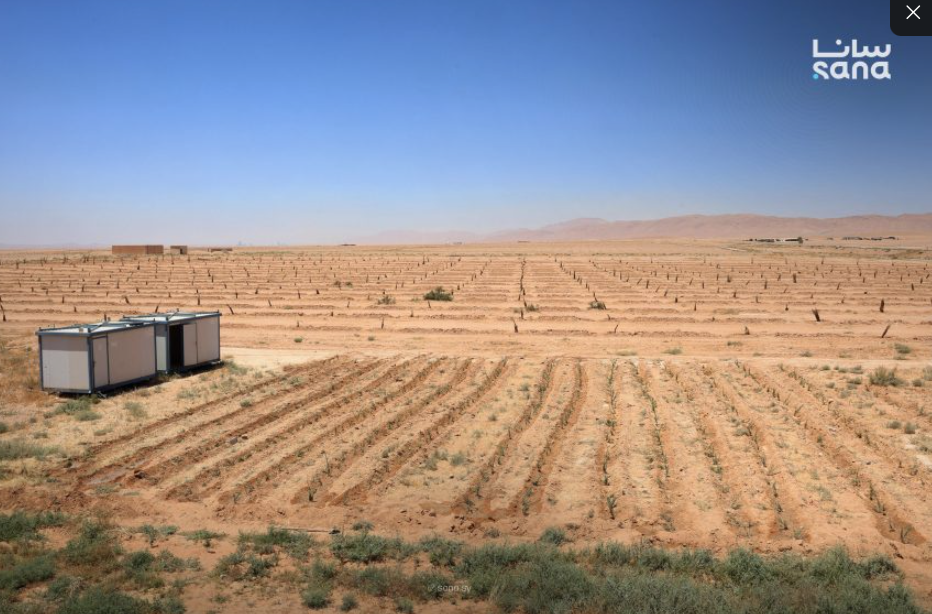
DAMASCUS: Authorities in the Syrian Arab Republic are working to rehabilitate irrigation networks, restore vegetation and support agricultural production in the country’s desert oases, which provide vital sources of income and employment for rural communities increasingly affected by drought and water shortages.
The oases in the country’s vast Badia region support farming, livestock breeding and local trade while helping communities maintain their livelihoods in areas where annual rainfall typically ranges between 100 and 200 millimeters.
Bayan Al-Abdullah, director-general of the General Authority for the Management, Development and Protection of the Badia, said the oases played an important economic and social role by providing agricultural products, grazing areas and jobs for local residents.
He said their development could also create opportunities in food processing, traditional handicrafts and ecotourism, helping diversify household incomes and strengthen rural economies.
Government-managed oases are spread across several provinces, covering different areas. In the Damascus countryside, the Al-Batma Oasis covers 50 hectares. In Homs province, the main oases include Al-Sawana (75 hectares), Wadi Al-Ahmar (27 hectares), Al-Munsef (23.4 hectares), Arak (25 hectares), Al-Hafna (47 hectares), Sabkhat Al-Mouh (63 hectares), Al-Abtar (50 hectares) and Khneifis (25 hectares).
In Deir Ezzor province, the Kabajeb Oasis covers 73 hectares, while Al-Shoula extends across 38 hectares.