

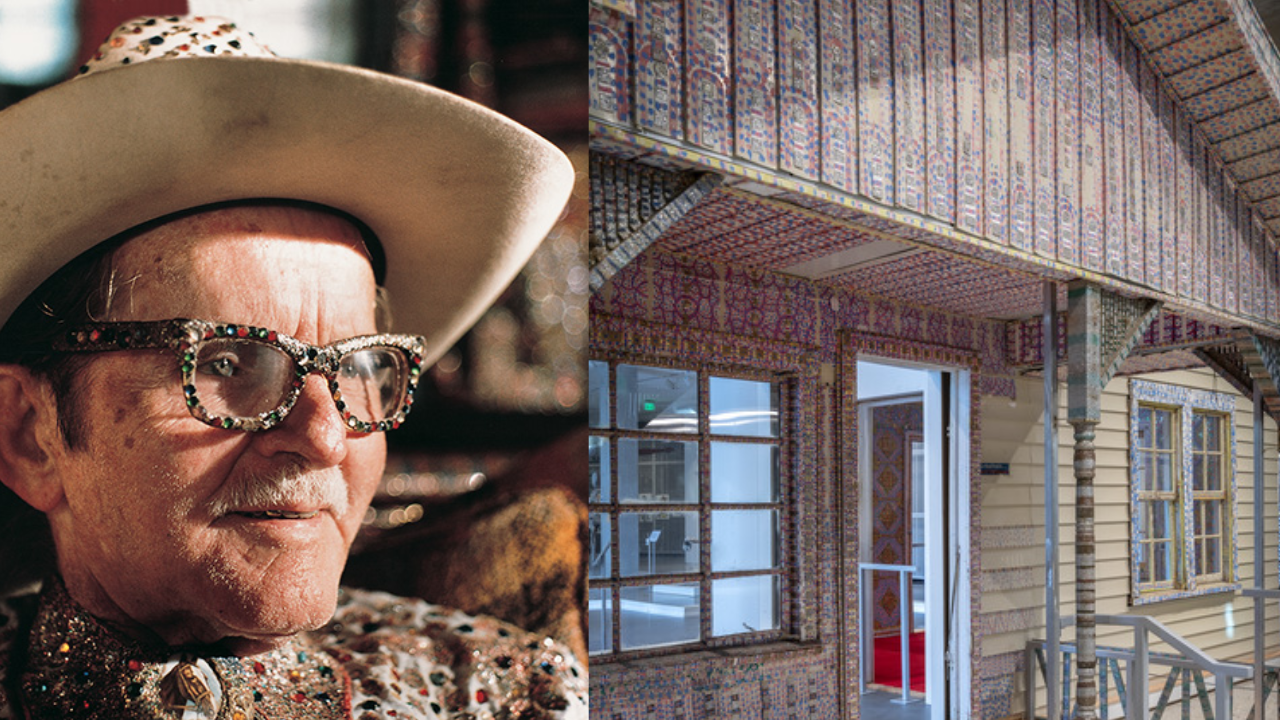
In rural Mississippi, a mechanic who had spent much of his life getting by on modest means began an unusual personal transformation in 1975. Inspired by Glen Campbell's hit song Rhinestone Cowboy, Loy Bowlin adopted a new identity and began decorating his clothes with sequins. The transformation took years, turning an ordinary house into an elaborate display that extended from its rooms to parts of its exterior. Bowlin, who became known as the Rhinestone Cowboy, died in 1995. His work did not disappear with him, however. Several parts of the house, along with his distinctive clothing and furniture, were eventually transferred to a museum in Wisconsin, as reported by Kohler Foundation.Loy Bowlin's early life in rural Mississippi before the Rhinestone CowboyBorn in 1909 in Franklin County, Mississippi, Bowlin grew up in a rural setting where money was often scarce. He married Ina Mae Mitchell in 1933, and the couple farmed, while Bowlin also earned money by selling scrap metal. Their marriage ended in the 1950s. Following the separation, Bowlin experienced a difficult period, with depression becoming part of his life.His Christian faith offered him some comfort during those years. By the middle of the 1970s, he was looking for a way to change his circumstances and how he felt about himself.How Glen Campbell inspired the Rhinestone CowboyIn 1975, Bowlin began…
Meet the Mississippi mechanic who transformed himself into the Rhinestone Cowboy
In brief
In rural Mississippi, a mechanic who had spent much of his life getting by on modest means began an unusual personal transformation in 1975. Inspired by Glen Campbell's hit song Rhinestone Cowboy, Loy Bowlin adopted a new identity and began decorating his clothes with sequins. Bowlin, who became known as the Rhinestone Cowboy, died in 1995.
This is the opening of the story, shared with credit to The Times of India — World. The rest of the report — with every detail — continues on the publisher’s website.
Continue reading at The Times of India — World ↗